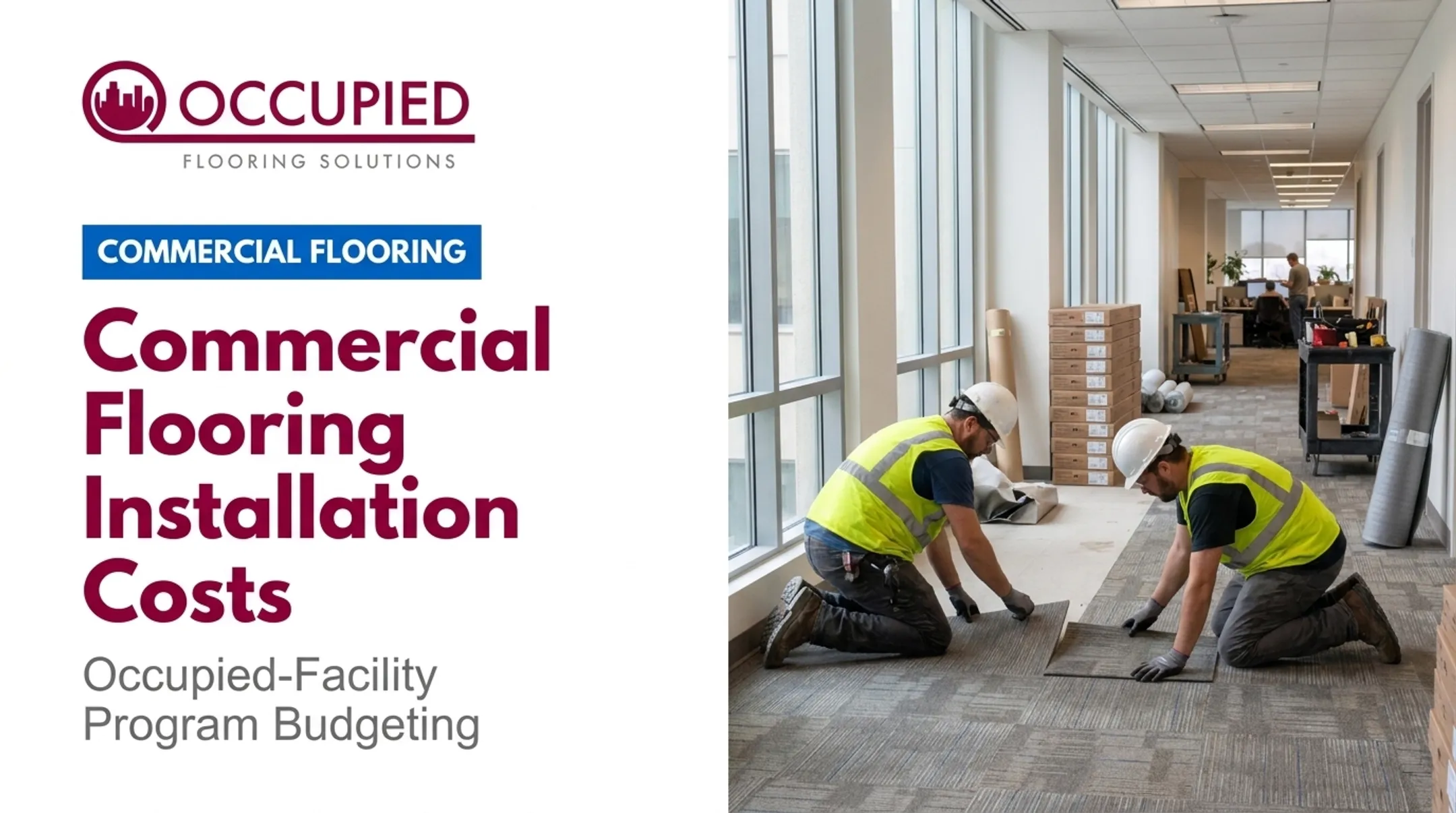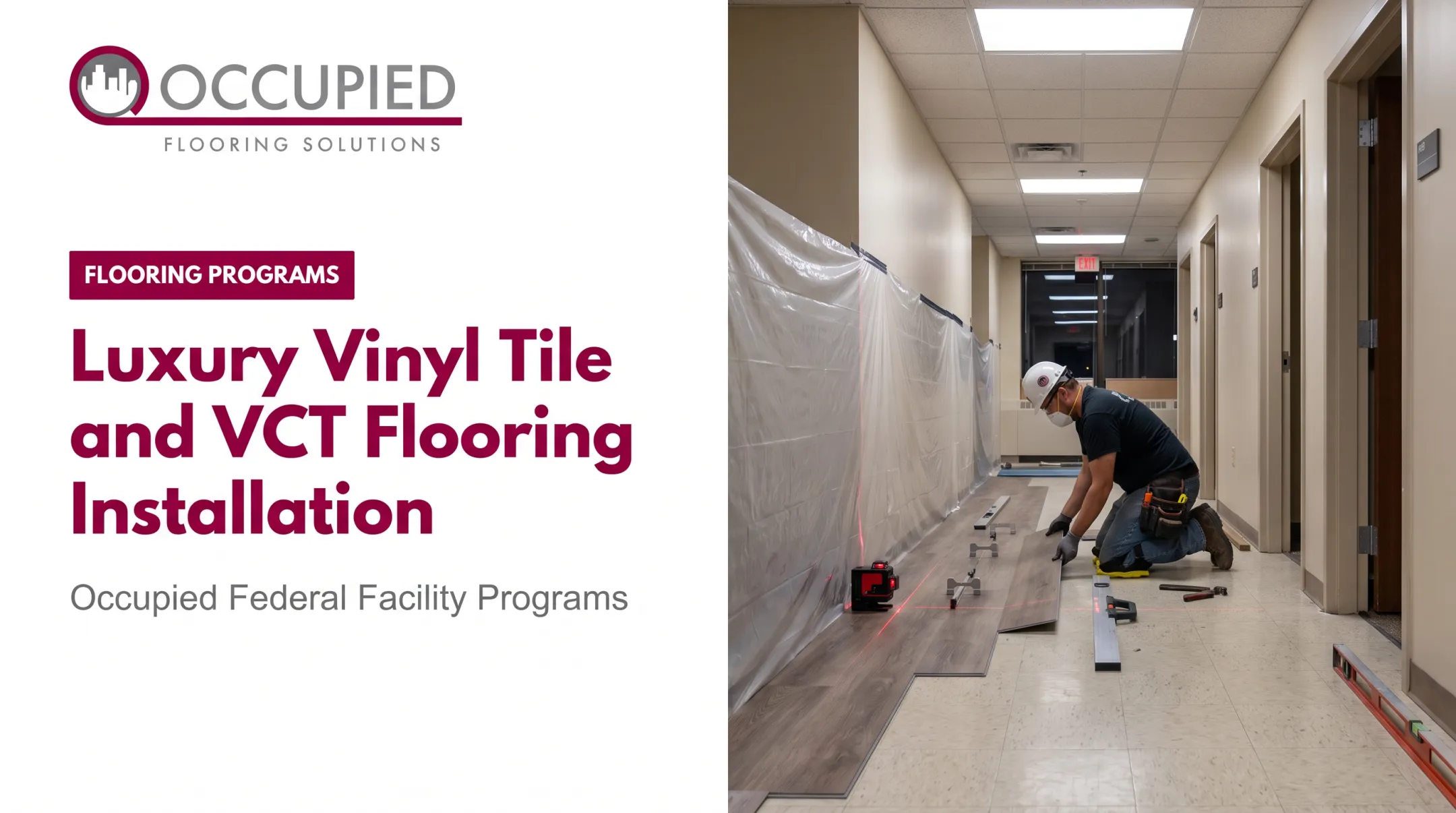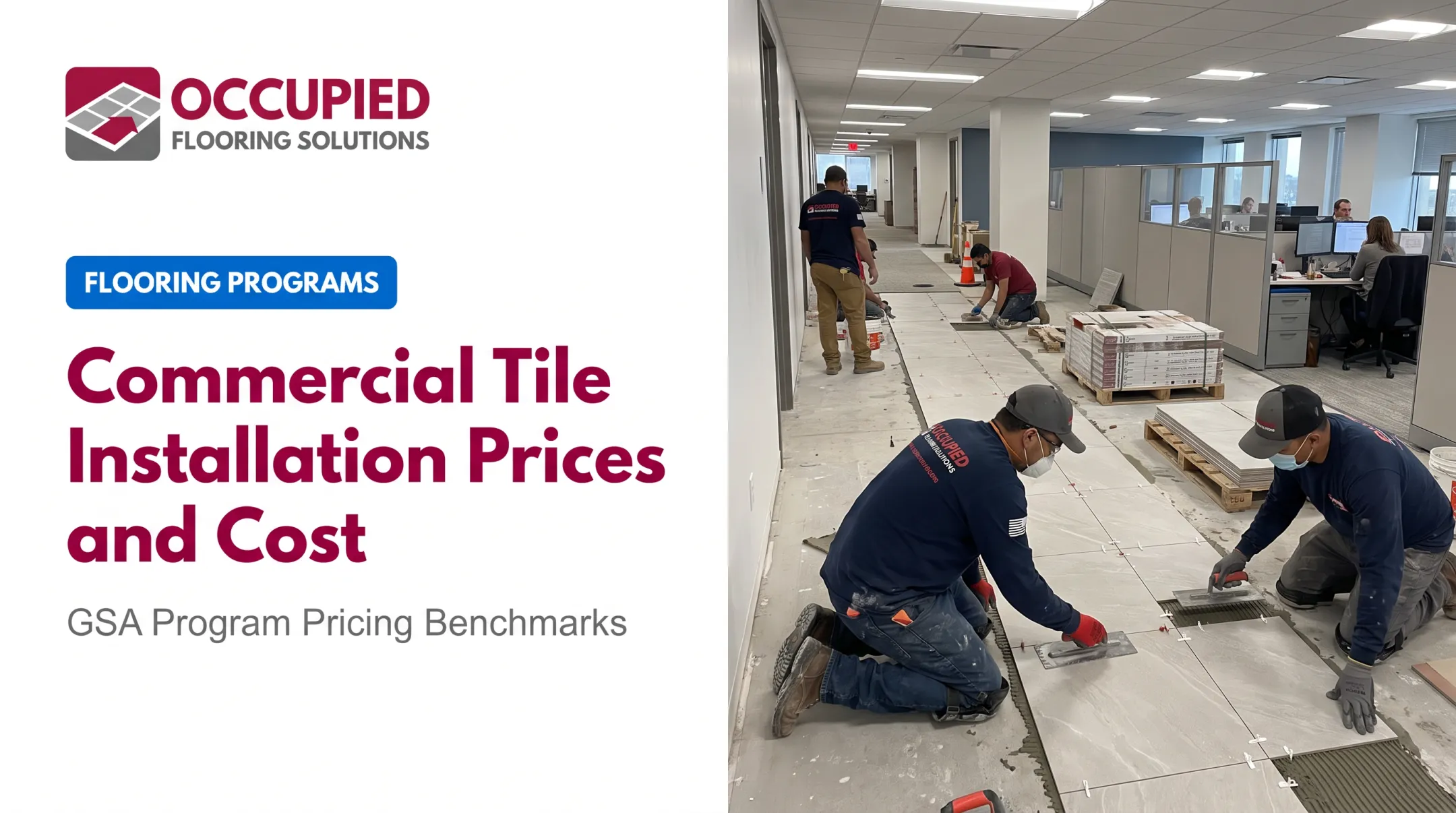

A quote in one market can look completely different from another, even for the same square footage. The final price tag is influenced by far more than just the tile itself. Factors like subfloor condition, labor rates, layout complexity, and whether the building is occupied during the work all play a significant role. This guide breaks down the real costs, separates material from labor, and explains the hidden variables that drive your final budget.
Key Takeaways
- Material vs. Installed Cost: Standard VCT material can be found for around $2.75 per square foot, but this excludes everything else. Real-world commercial installation bids often fall between $4.00 and $7.93 per square foot, a range that may not even include significant floor preparation or removal of old flooring.
- Major Cost Drivers: The biggest variables in your budget will be labor, extensive subfloor preparation, removing existing flooring, the complexity of your layout, and whether the work must happen after hours in an occupied facility.
- Scale Matters: A small, 100-square-foot room will almost always have a higher per-square-foot cost than a wide-open 10,000-square-foot area due to fixed mobilization and setup costs.
- Lifecycle, Not Just Upfront Price: VCT requires a consistent maintenance program of cleaning, polishing, and eventual stripping to preserve its appearance and durability. The lowest installation bid isn't the lowest total cost if it leads to premature failure or higher upkeep expenses.
How Much Does VCT Tile Flooring Installation Cost? (Pricing Overview)
There is no single, fixed price for VCT installation across the United States. Any number you see online should be treated as a starting point for planning, not a firm quote. Misreading bid components leads to underbudgeting, skipped prep, and costly change orders that disrupt operations.
A comprehensive quote is always based on a site inspection and a detailed review of the project scope.
Typical Cost Range
To build a realistic budget, it’s best to break the costs down into their core components: materials, labor, and the all-in installed price.
- VCT Tile Material Only: For standard commercial-grade VCT, a reasonable budget figure for the tile alone is around $2.75 per square foot. This is based on a 2025 municipal project quote for Armstrong Standard Excelon tile. Premium colors, specialty specifications, or smaller orders will cost more.
- Basic Installation Labor: National labor-only averages are hard to isolate. Most commercial bids assume a clean, prepared subfloor, open access, a standard grid, and normal business hours—so labor is the swing factor between material-only and installed pricing.
- Total Installed Cost (Example Range): Recent 2025 bids for a federal office project in Massachusetts ranged from $4.00 to $7.93 per square foot for VCT installation.
Confirm whether any bid includes adhesive, floor finish, demolition, or subfloor repairs—those line items drive most of the spread.
Applied to common project sizes, that range looks like this:
| Area Size | Estimated Budget (Using $4.00 - $7.93/sq. ft. Range) | Important Caveats |
|---|---|---|
| Small Office (200 sq. ft.) | $800 – $1,586 | Small jobs often have minimum charges, increasing the per-square-foot rate. |
| Retail Space (1,000 sq. ft.) | $4,000 – $7,930 | Does not include furniture moving, after-hours work, or complex pattern installation. |
| School Hallway (5,000 sq. ft.) | $20,000 – $39,650 | Assumes an open, unoccupied area. Prep and removal are likely separate costs. |
A 1,000-square-foot project rarely costs exactly ten times a 100-square-foot job. Mobilization, minimum labor charges, and setup get spread across more area on larger work, which lowers the per-square-foot rate.

For multi-site portfolios, add a program-management scope for logistics, reporting, and spec standardization—site-by-site bids alone won’t control regional variance.
Key Factors That Affect the Cost of VCT Tile Flooring Installation
Two seemingly identical flooring projects can receive very different quotes. The gap usually comes down to product choices, site conditions, and how the work has to be run.
Type, Specification, and Material Quality
Standard VCT is a commodity, but not all VCT performs the same. Higher-spec lines may add thickness, limited color ranges, or warranties built for heavy commercial traffic.
Matching a discontinued product—or a pre-approved catalog for a national or federal brand standard—can raise procurement cost and extend lead times.
Size, Scale, and Layout
Layout drives labor efficiency. A large open warehouse floor is straightforward. An office with many small rooms, closets, columns, and corridors needs far more cutting and detail work.
Complex layouts that raise cost include:
- Checkerboard or multi-color patterns
- Diagonal installations
- Custom logos or wayfinding
- Borders and inlays
Each adds material waste and labor hours for precise cuts and layout control.
Subfloor Condition and Existing Flooring
VCT needs a clean, dry, smooth substrate. Under the ASTM F710 standard, concrete must be tested for moisture and pH before install. Imperfections telegraph through the finished floor and can cause visible defects or adhesive failure.
Common subfloor prep costs include:
- Patching and grinding cracks, holes, and high/low spots
- Skim coating with cementitious underlayment for a smooth plane — a 2025 project quote showed this adding $1.13 per square foot
- Moisture mitigation when vapor emission rates exceed limits
Removing the old floor is a separate line item. Tear-out and disposal of carpet, VCT, or ceramic can add meaningful cost on its own.
If existing flooring was installed before 1980, OSHA guidance requires you to assume asbestos until a lab test proves otherwise — and that can trigger a separate abatement scope.
Installation Environment and Operational Requirements
New construction is comparatively simple. An active hospital, secure federal building, or occupied office is not — and the operating constraints show up in the price.
Occupied projects often require:
- Phased, zone-by-zone scheduling to limit disruption
- Night or weekend crew shifts
- Dust containment and protection for adjacent finishes
- Lift-and-move handling for workstations, fixtures, or equipment
- Security escorts and controlled access in sensitive facilities
Those steps protect business continuity, but they add labor hours and coordination cost. Occupied Flooring Solutions plans VCT replacement around active operations — including phased and after-hours work — so facilities can avoid full shutdowns, broad furniture teardown, or IT disconnects when the scope allows.
Finishing, Maintenance, and Lifecycle Requirements
Confirm whether the quote includes adhesive, initial sealer, and the polish coats required to protect new VCT. Per Armstrong's maintenance guidelines, new VCT needs at least two coats of polish, with three to five coats recommended for best results.
After install, budget for routine cleaning, periodic scrub and recoat cycles, and eventual strip-and-refinish work.
Manufacturers may cite a 25-year service life under ideal conditions. Real lifespan tracks installation quality and how consistently the floor is maintained.

Cost Breakdown of VCT Tile Flooring and Low-Cost vs High-Cost Options
A total project budget is much more than the price of the tile. To compare bids accurately, you need an itemized scope that breaks down every component of the job.
| Cost Component | Description |
|---|---|
| Initial Materials | Includes VCT tiles (plus a waste allowance), adhesive, primers, transition strips, and base materials. Freight and taxes are often separate line items. |
| Installation and Setup | Covers the labor for layout, applying adhesive, setting and cutting tile, and rolling the floor. Confirm if furniture movement and site protection are included. |
| Subfloor Prep & Removal | This can be a major cost. Includes tear-out of old flooring, disposal, patching, leveling, and any required moisture testing or mitigation. Asbestos abatement is a separate, specialized scope. |
| Finishing and Turnover | Covers applying the initial coats of sealer/polish, installing transitions, replacing wall base, final cleaning, and any closeout documentation. |
| Ongoing Maintenance | A recurring operational cost for routine cleaning, buffing, recoating, and periodic stripping and refinishing to maintain the floor's appearance and durability. |
Lower-Cost vs. Higher-Cost VCT Approaches
Choosing the cheapest bid can be tempting, but it often carries hidden risks and long-term costs.
- Low-cost specs on weak prep often miss traffic needs; higher-value work funds prep and the right product grade
- Unqualified labor or low-grade adhesive causes lifting, shifting, and telegraphing subfloor flaws
- Solid install and maintenance can last decades; poor work can fail in a few years and raise ownership cost
- VCT is often cheaper upfront than LVT, but LVT usually needs less polishing and stripping
In one 2025 federal bid, one contractor priced VCT at $4.22/sf and LVT at $5.28/sf, while another priced both at $6.45/sf. The better pick depends on budget, aesthetics, and your capacity for ongoing maintenance.
Paying more for thorough prep, occupied-space project management, and clear documentation is often cheaper than a low bid full of exclusions, change orders, and downtime.
How to Estimate the Right Budget for VCT Installation and Avoid Missed Costs
Building an accurate budget starts with defining the project's operational needs, not just the square footage.
- Define facility use, traffic levels, operating hours, and occupied-space constraints. Set a completion date and note whether this is one site or part of a multi-site portfolio.
- Measure total floor area and add waste (typically 5–10%, more for complex patterns). Estimate prep, removal, finishing, and contingency as separate line items.
- Require itemized quotes—not a single lump sum. Each bid should name tile brand and adhesive, and spell out what labor, prep, removal, finishing, furniture handling, and access work include or exclude.
- For active facilities, demand a phasing plan that shows how crews will work around tenants, staff, and daily operations. A vague answer is a red flag.

Organizations with recurring work across multiple locations often get tighter cost control from a programmatic model. Occupied Flooring Solutions’ National Flooring Program standardizes specifications, uses preset labor pricing to limit regional swings, and gives portfolio teams one point of contact.
That structure helps facility, property, and capital planning teams keep execution predictable and budgets transparent across dozens or hundreds of sites.
What Most People Miss When It Comes to VCT Cost
- Focusing only on tile price and missing prep, removal, finishing, and furniture moving
- Assuming a per-square-foot rate covers after-hours work, security coordination, or occupied-building project management
- Skipping asbestos testing on older floors, which can turn removal into full abatement
- Picking the lowest bid without comparing exclusions, installer qualifications, schedule control, and operations protection
Conclusion
The true cost of a VCT flooring installation includes more than the tile price. Final budgets cover material specification, labor rates, subfloor preparation, demolition, layout complexity, and your facility’s operational needs. A reliable estimate separates one-time installation costs from recurring maintenance and defines all assumptions before work begins.
Whether you manage a single property or a national portfolio, the goal is the same. Secure a detailed, site-specific quote that balances upfront cost with long-term value, durability, and uninterrupted service continuity for your organization.
Frequently Asked Questions
What is the cost of VCT tile per square foot?
VCT material alone can cost around $2.75 per square foot for standard grades. However, recent commercial installation bids have ranged from $4.00 to $7.93 per square foot, a price that may not include major preparation, demolition, or work in occupied spaces.
Is VCT cheaper than LVT (luxury vinyl tile)?
VCT usually costs less upfront than LVT. LVT often needs less maintenance (no waxing or stripping), so lifecycle cost can stay competitive. When installed prices look similar, price both options.
How much does it cost to install 1,000 sq. ft. of vinyl flooring?
At $4.00–$7.93 per square foot for VCT, 1,000 sq. ft. typically runs $4,000–$7,930 for a basic install. Final cost depends on subfloor condition, demolition, layout, and occupied-space work.
What is included in a VCT installation estimate?
A basic estimate usually covers tile, adhesive, and standard installation labor. Confirm whether prep, old-floor removal, furniture moving, initial finish, delivery, and project management are included—these are often extra.
Does VCT require ongoing maintenance after installation?
Yes. VCT is not a "set it and forget it" floor. Budget for routine cleaning, spray buffing, periodic polish recoating, and eventual stripping and refinishing.