
Two projects with identical square footage can land on wildly different budgets once you factor in carpet quality, padding grade, existing floor condition, room layout, local labor rates, and whether the space needs to stay operational during the work. A vacant apartment and an occupied federal office simply aren't the same job, even if the flooring plan looks identical on paper.
This guide breaks down current pricing ranges, the cost components hiding inside a per-square-foot quote, the variables that push budgets up or down, and a practical method for comparing bids across residential, commercial, institutional, and multi-site projects.
Key Takeaways
- Carpet material alone is about $1–$20/sq ft by fiber; installed pricing usually lands at $3–$11.
- Removal, disposal, and subfloor prep are often billed separately and may be missing from the first quote.
- Occupied offices, healthcare, and government sites cost more due to phasing, furniture handling, and after-hours labor.
- The lowest per-square-foot rate rarely equals the lowest total cost once full scope is compared.
How Much Does Carpet Replacement Cost?
There's no single national price for "carpet replacement" because the phrase means different things to different bidders. Depending on the contractor, it might mean materials only, labor only, or a full turnkey project that includes tear-out and disposal.
Here's how the major cost layers break down, based on current US flooring industry data:
| Cost Layer | Typical Range | What It Covers |
|---|---|---|
| Carpet material only | $1-$20/sq. ft. | Fiber, backing, style (no labor) |
| Installation labor only | $0.50-$1/sq. ft. | Labor to lay carpet already on-site |
| Carpet + padding + installation | Roughly $4.25-$14/sq. ft. | Full room job, no removal |
| Full replacement (with removal/disposal) | $780-$2,812 per project (residential) | Old carpet out, new carpet in, cleanup included |

A quick estimating formula: total carpeted square footage × your researched installed rate, plus allowances for removal, prep, transitions, and taxes.
Residential single-room totals in the table are useful anchors only. A private office (roughly 120–150 sq. ft.) might land around $500–$1,200 installed; an open work area or conference suite (400+ sq. ft.) often runs $2,000–$5,000 depending on fiber and prep. Multi-room floors and commercial suites climb past $10,000 once corridors, seams, and furniture logistics enter the picture—treat these as starting points, not quotes.
Budget, mid-range, and premium tiers differ in more than price:
- Budget carpet (polyester, olefin): lower cost, shorter wear life, light-traffic zones
- Mid-range (nylon): better texture retention, moderate durability
- Premium (triexta, wool): higher upfront cost, longer wear life, stronger warranties
Never compare two per-square-foot bids unless you've confirmed the scope matches. A $4/sq. ft. quote that excludes removal isn't cheaper than a $6/sq. ft. quote that includes it. It's just incomplete.
Key Factors That Affect Carpet Replacement and Installation Cost
Pricing reflects five things at once: material, labor, site conditions, project complexity, and operational requirements. Each factor below can shift a bid up or down independently.
Carpet Type, Fiber, Pile, and Backing
Fiber choice drives material cost directly:
- Polyester/Olefin: $1-$3/sq. ft., good stain resistance, weaker texture retention in heavy traffic
- Nylon: $2-$5/sq. ft., strong durability, standard for high-traffic commercial areas
- Triexta: $3-$8/sq. ft., solid middle-ground performance
- Wool: $4-$20/sq. ft., premium natural fiber, higher cost ceiling
Commercial specifications often prioritize wear resistance, cleanability, and consistent appearance over residential softness. The Carpet and Rug Institute recommends dense, low-pile construction (½ inch or less) for corridors and other high-traffic zones. That detail belongs in your spec, since fiber name alone doesn't guarantee performance.
Project Size, Room Geometry, and Material Waste
Square footage isn't the whole story. Seams, closets, stairs, and pattern-matching all add material and labor time. Irregular room shapes and busy corridor cutouts generate more waste than a simple rectangular room, so estimators should account for cut plans and seam placement rather than applying a blanket waste percentage.
Site Preparation and Existing-Floor Conditions
Old carpet doesn't just disappear. Removal, pad extraction, tack-strip removal, adhesive scraping, and subfloor leveling are common. They're also commonly excluded from an initial quote. A reliable proposal states plainly which of these are included, which are excluded, and which trigger a change order once the crew opens up the floor.
Installation Complexity and Labor Access
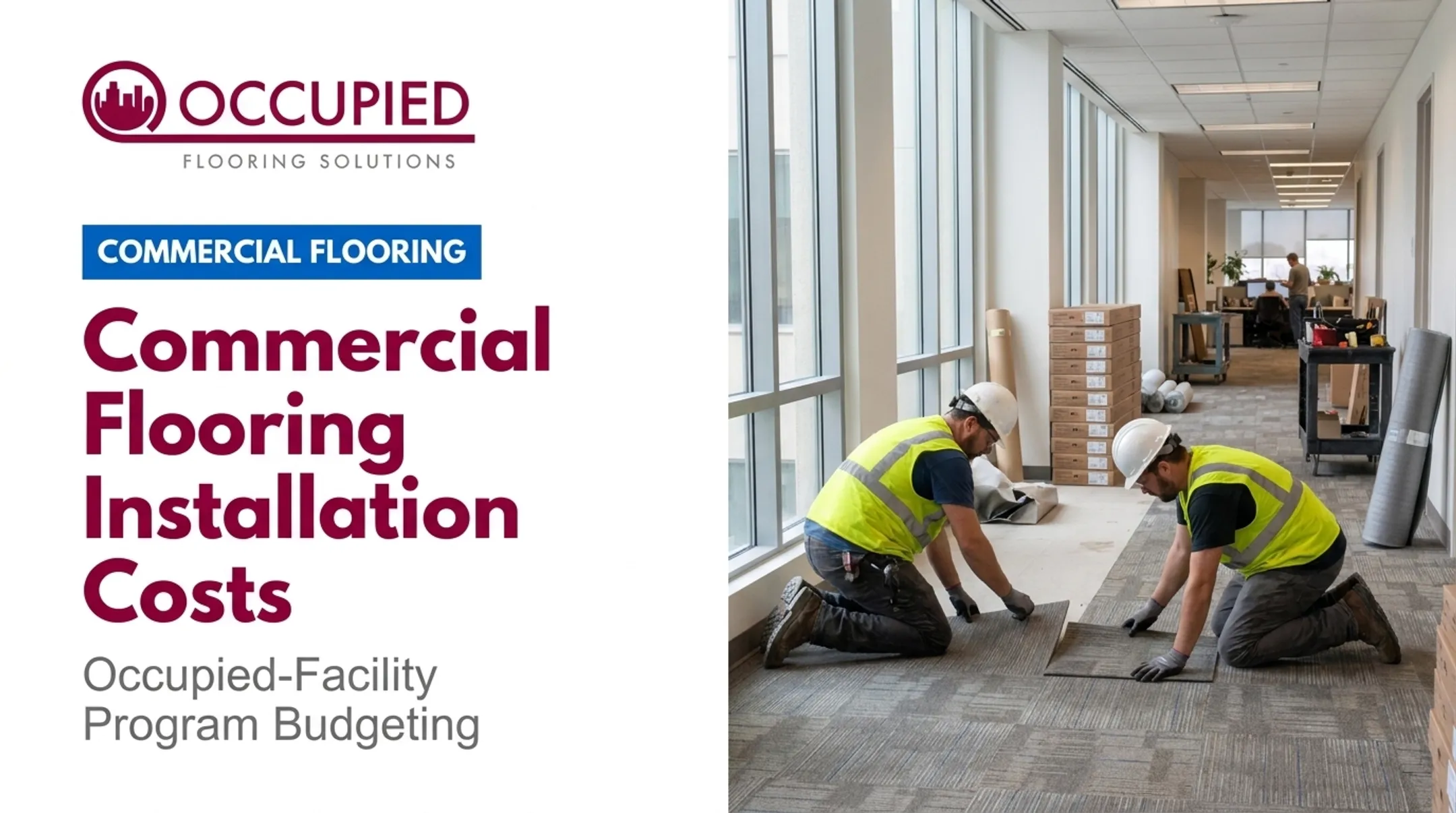
Stairs, tight corridors, furniture systems, restricted loading docks, and security checkpoints all add labor hours. A vacant, ground-floor room is straightforward. An occupied high-rise floor with cubicles, live electrical connections, and elevator scheduling is a different job entirely. It demands protection for equipment, furniture, and daily operations throughout the work.

Commercial, Federal, Institutional, and Multi-Site Requirements
Federal and institutional work carries its own cost structure: approved product lists, certified installer requirements, security coordination, documentation, and warranty tracking. Notably, GSA's May 2026 Global Lease Template removed its cyclical carpet-replacement requirement in favor of condition-based triggers. Replacement now depends on visible wear, curling edges, or trip hazards rather than a fixed calendar.
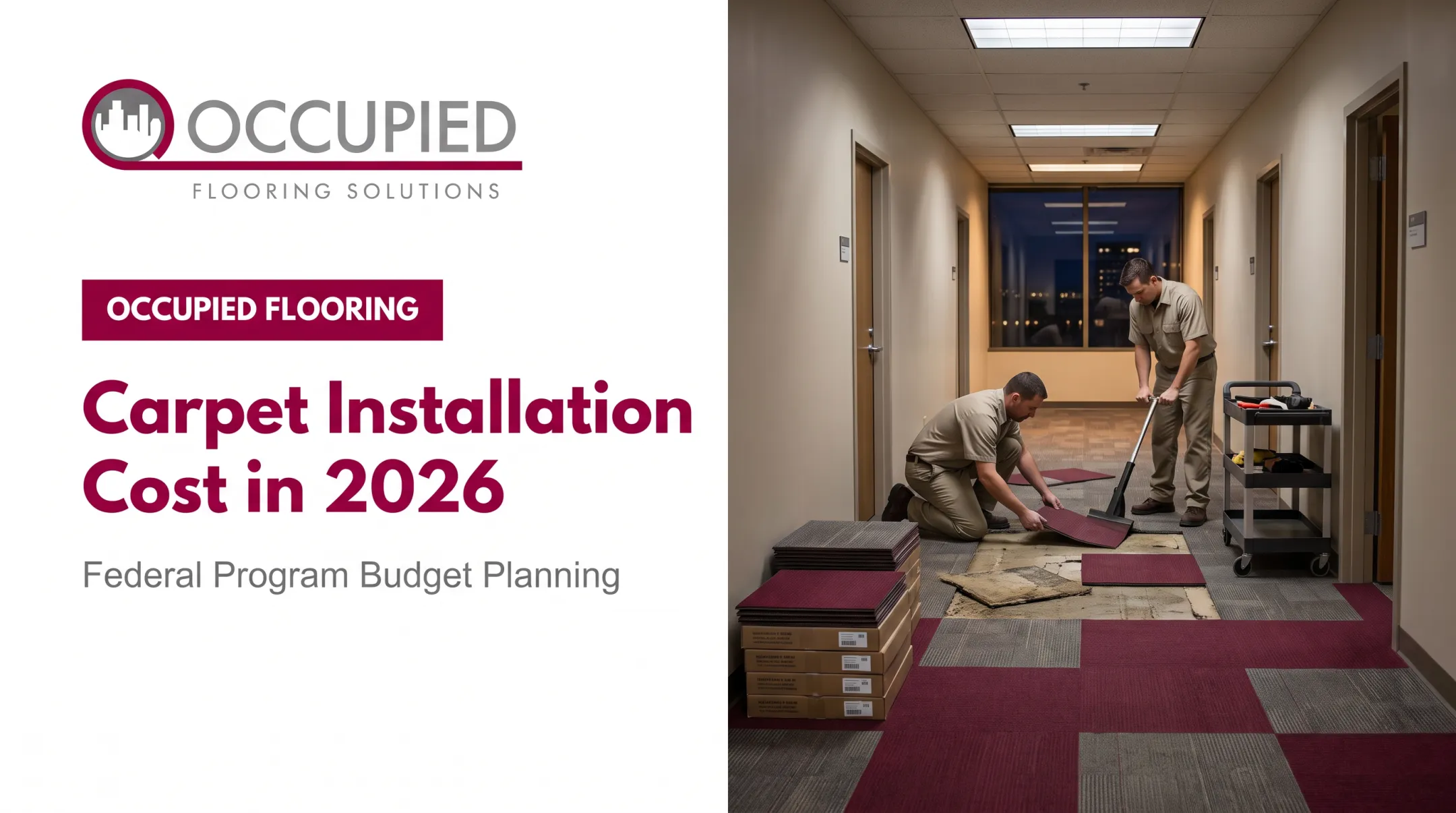
That same lease requires furniture to be moved and returned, often after normal business hours, when flooring work happens in occupied space.
This is exactly the environment Occupied Flooring Solutions works in daily: phased, zone-by-zone replacement across occupied federal and institutional buildings, coordinated around security clearances and live operations rather than assuming an empty floor plate.
Location, Timing, and Procurement Model
Regional labor rates, freight costs, and material lead times all move pricing. A 2025 industry report noted select carpet tile collections shipping within 10-15 business days, subject to product and quantity conditions. That's a helpful benchmark, but not a universal lead time.
Standardized materials and volume purchasing can improve cost control across a portfolio, though any specific savings figure should come with supporting evidence rather than an assumed percentage.
Carpet Replacement Cost Breakdown
A usable carpet budget splits installed project costs from ongoing maintenance and the eventual rip-and-replace cycle. Line items below are the ones that most often move a commercial or multi-site quote.
Carpet and Required Accessories
Standard installed quotes usually include the carpet, backing, and basic seam materials. Verify line by line whether padding, transitions, and stair accessories are bundled in or billed separately — these small items add up across a large project.
Removal, Disposal, and Site Preparation
Carpet removal costs run roughly $1–$5 per square foot, including disposal and cleanup (Angi pricing data). Quotes may use per-square-foot, per-room, hourly, or flat-allowance units, so match the pricing unit before you compare numbers. Site prep can include:
- Tack-strip and adhesive removal
- Subfloor inspection and repair
- Moisture testing and mitigation
- Leveling and cleaning before new carpet goes down
Installation Labor and Access
Basic installation covers measuring, cutting, seaming, stretching, and stair work. Occupied projects add cost drivers that vacant-room quotes omit:
- Phased work zones and return visits
- Temporary protection for adjacent areas
- Night or weekend scheduling
- Secure or escort-required site access when the facility requires it
Project Administration and Compliance
Commercial and government projects carry administrative weight: product submittals, scheduling meetings, security procedures, closeout documentation, and warranty registration. For portfolio teams running several properties at once, that overhead is why program delivery matters. Occupied Flooring Solutions' National Account Program consolidates this into one contract, standardized execution, preset labor pricing, and a single point of contact with visibility across locations, so teams are not re-negotiating scope and price building by building.
Lifecycle and Replacement Planning
Installed price is only part of total cost of ownership. Cleaning, spot repairs, and planned replacement drive the rest. Commercial replacement cycles vary widely by traffic, fiber, and maintenance. A busy corridor or elevator lobby can need replacement far sooner than a low-traffic private office, regardless of what the fiber label promises. Build refresh timing into the capital plan instead of treating failure as a surprise expense.
How to Estimate the Right Carpet Replacement Budget
Building an accurate budget follows a clear sequence:
- Measure carpeted areas precisely, including closets and stairs.
- Identify use and traffic level. A lobby and a private office don't need the same spec.
- Select a performance specification matched to that traffic level, not just a color you like.
- Inspect existing conditions for moisture, adhesive residue, or subfloor damage.
- Define access and phasing requirements if the space is occupied.
- Request a written scope, not just a per-square-foot number.

Use this checklist when comparing quotes:
- Carpet and padding specifications
- Square footage and waste assumptions
- Removal, disposal, and prep charges
- Furniture handling and stair work
- Labor hours or rates
- Taxes, warranty terms, and schedule
- Change-order terms for unexpected conditions
Compare bids on equal scope, not headline rate. Ask for separate base, optional, and contingency line items so you can see exactly where the money goes.
Portfolio teams managing multiple sites often benefit from a standardized materials catalog, a national rate card, and live work-order reporting.
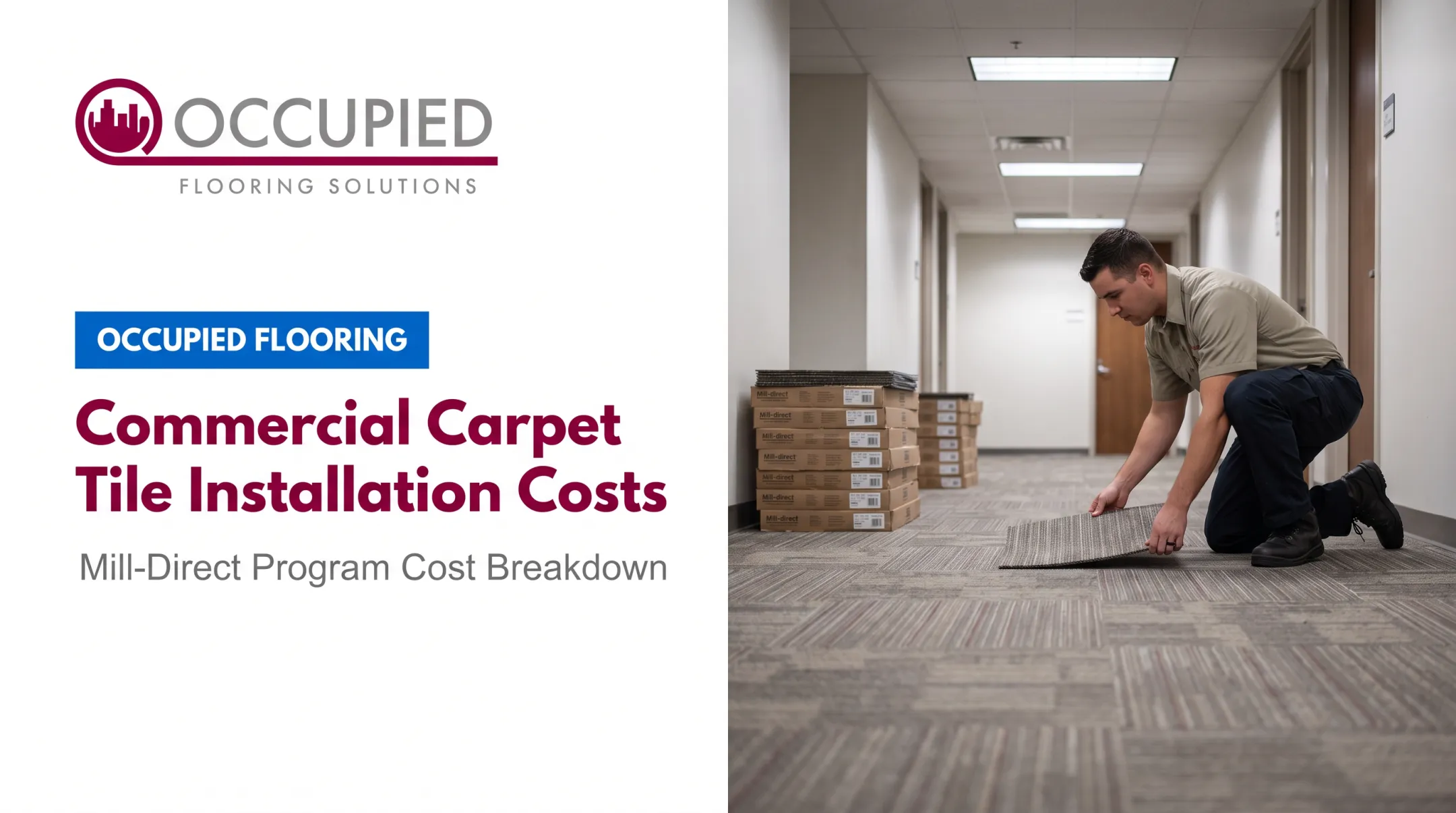
Occupied Flooring Solutions builds that structure into its National Account Program and mill-direct sourcing model. Institutional and federal clients get manufacturer-direct pricing while the team manages logistics and compliance.
Common budgeting mistakes to avoid:
- Budgeting only for carpet material, forgetting labor
- Assuming removal is automatically included
- Ignoring subfloor prep until the crew finds a problem
- Underestimating waste from seams and pattern matching
- Overlooking furniture logistics or security coordination
- Choosing a spec that exceeds what the space actually needs
- Accepting a quote with no defined exclusions
Not every worn carpet needs full replacement, either. Depending on condition, traffic, and moisture exposure, a partial replacement, spot repair, deep cleaning, or a switch to carpet tile in high-wear zones might solve the problem for less.
Conclusion
US carpet replacement prices vary widely based on material, area, site preparation, and installation complexity, including whether the project happens in a vacant room or a fully occupied building. A single per-square-foot figure can't capture all of that.
A detailed scope and comparable, apples-to-apples quotes will always produce a more reliable budget than a generic headline rate. That holds especially when daily operations, security requirements, and tenant experience matter as much as the flooring itself.
Frequently Asked Questions
How much does carpet replacement cost per square foot and for common room sizes?
Installation typically runs $3-$11 per square foot, while a full replacement project including removal often totals $780-$2,812 for an average room. Always confirm whether padding, labor, and removal are included in any room-size estimate.
What is a reasonable price to pay for carpet?
A reasonable price depends on fiber, pile density, backing, and expected traffic, not a single national average. Confirm whether the figure quoted is material-only or a complete installed scope before judging if it's fair.
How much should I pay for carpet installation?
Basic installation labor alone runs $0.50-$1 per square foot, but a full project including prep, removal, and access needs (stairs, furniture, occupied phasing) pushes the total well above labor-only rates.
How often should carpet in a house be replaced?
Most residential carpet lasts 5-15 years, depending on traffic, fiber, and maintenance. Visible wear, odors, stains, or a failing backing are better replacement signals than age alone.
Is carpet with attached pad good?
Attached-pad carpet works well for convenience and certain commercial or high-turnover spaces, but a separate cushion often performs better for comfort, repairability, and warranty coverage in higher-traffic residential or commercial settings.
Is it cheaper to lay flooring or carpet?
Carpet often has a lower initial cost per square foot than tile, though vinyl can be comparable. Factor in maintenance, moisture resistance, and expected lifespan. Carpet's 5-15 year cycle is shorter than vinyl or tile's longer service life.