
The total cost can swing dramatically based on the type of vinyl you choose, the condition of your subfloor, and the complexity of the job. According to a 2025 analysis from Fixr, replacing carpet with vinyl in a 200-square-foot room can range from $600 to $3,900. This wide range shows that material selection, carpet removal, labor, and prep work are major factors.
This article breaks down everything you need to know to build an accurate budget. We’ll cover installed cost tiers, hidden charges, and how to compare quotes to find the best long-term value for your space.
Key Takeaways
- The national installed cost to replace carpet with vinyl flooring typically ranges from $3 to $21.50 per square foot, depending on the vinyl type and project complexity.
- The most significant cost drivers are the vinyl specification (sheet vs. LVP), subfloor condition, carpet removal method (standard vs. glued-down), and labor for complex layouts or stairs.
- While basic carpet can be cheaper upfront, vinyl offers distinct advantages in durability, moisture resistance, and cleaning, especially in high-traffic commercial or institutional settings.
- A large, open, and vacant installation will almost always have a lower cost per square foot than a small, complex, or occupied project requiring phased work.
- The best budget balances product performance, installation quality, and expected service life—not just the lowest initial price tag.
How Much Does It Cost to Replace Carpet With Vinyl?
There is no single price for replacing carpet with vinyl flooring. The final cost is a combination of materials, demolition, preparation, and labor. Estimates are usually provided per square foot, so confirm what that rate includes.
Here’s a look at the typical cost ranges for each component in the United States.
Vinyl Material Costs (Per Square Foot)
Prices vary based on type, thickness, wear layer, and core construction.
- Sheet Vinyl: $1 to $2 per sq. ft.
- Vinyl Composition Tile (VCT): $1 to $4 per sq. ft.
- Standard Vinyl Plank (LVP): $2 to $7 per sq. ft.
- Luxury Vinyl Plank/Tile (LVP/LVT): $3 to $12 per sq. ft.
These figures, based on data from This Old House and Fixr, are for materials only. Premium LVP with features like a rigid core, acoustic backing, or intricate patterns will be at the higher end of the scale.
Labor and Preparation Costs (Per Square Foot)
Demolition and installation often cost as much or more than the materials. Basic prep may be included in the labor rate; significant repairs are extra.
- Standard Carpet Removal: $0.50 to $1.50 per sq. ft. for carpet and pad
- Glued-Down Carpet Removal: $3 to $5 per sq. ft. when adhesive must be scraped (Angi)
- Vinyl Installation Labor: $1 to $10 per sq. ft. Click-lock floating floors cost less; glue-down and complex patterns cost more
- Subfloor Leveling: $1 to $5 per sq. ft. beyond basic prep
- Underlayment or Vapor Barrier: $0.65 to $1.40 per sq. ft.
Project Cost Tiers (Installed Price Per Sq. Ft.)
To see how these costs come together, here are three project profiles for a complete carpet-to-vinyl replacement.
| Project Tier | Typical Installed Cost (per sq. ft.) | What It Usually Includes |
|---|---|---|
| Budget | $3 - $7 | Basic sheet vinyl or VCT, standard carpet removal, clean subfloor, simple room layout. |
| Mid-Range | $7 - $18 | Standard LVP with a good wear layer, professional subfloor prep, standard transitions. |
| Premium | $12 - $22+ | High-spec LVT/LVP, extensive subfloor leveling or moisture mitigation, stairs, complex layouts, or glue-down installation. |

Important: These ranges often exclude moving furniture, major subfloor repairs, painting baseboards, taxes, and delivery fees. Always confirm what is in your quote.
Example Project Budgets
Multiplying the material price by your square footage is a common mistake. Here’s how total project costs can look for different-sized areas, including removal and installation.
- Small Room (200 sq. ft.):
- Budget: $800 - $1,400
- Mid-Range: $1,400 - $3,600
- Premium: $2,400 - $4,400+
- Medium Area (1,000 sq. ft.):
- Budget: $4,000 - $7,000
- Mid-Range: $7,000 - $18,000
- Premium: $12,000 - $22,000+
- Large Facility (2,000 sq. ft.):
- Budget: $8,000 - $14,000
- Mid-Range: $14,000 - $36,000
- Premium: $24,000 - $44,000+
These are for planning purposes only. Smaller jobs have higher per-square-foot costs because fixed charges for mobilization and disposal are spread over a smaller area.
Key Cost Factors and Complete Cost Breakdown
A reliable estimate breaks the project down into clear line items. Understanding each component helps you compare bids accurately and avoid surprise charges.
Vinyl Flooring Type and Specification
The material itself is a primary cost driver. A thicker wear layer, rigid core (SPC or WPC), attached acoustic backing, and a longer warranty raise the unit price—and improve durability.
According to a 2026 report from This Old House, luxury vinyl plank materials can cost up to $10 per sq. ft. before installation.
Carpet Removal, Disposal, and Site Preparation
This is more than just pulling up old flooring. A complete demolition scope includes:
- Moving and protecting furniture and fixtures
- Removing old carpet and padding
- Pulling up tack strips and staples
- Scraping residual adhesive
- Hauling and disposing of debris
If the crew discovers unexpected issues like a damaged subfloor or moisture after the carpet is removed, costs will increase.
Subfloor, Underlayment, and Moisture Requirements
Vinyl flooring needs a clean, dry, and flat substrate. Any imperfections in the subfloor can telegraph through to the new vinyl, causing visible flaws and premature wear.

- Leveling: Fill low spots with leveling compound before install
- Moisture mitigation: Test concrete slabs; high readings may need a vapor barrier or full mitigation system
- Underlayment: Use attached pad when included, or add acoustic underlayment in multi-story spaces
Labor, Layout, and Installation Method
Labor costs are not fixed. They are influenced by:
- Installation method: Click-lock floating floors usually install faster and cost less than glue-down systems
- Room complexity: Open rectangular rooms bid lower; corners, closets, curves, and obstacles add cuts and time
- Stairs: Priced separately per step because of detailed, labor-heavy fitting
Finishing Materials and Related Work
Finishing line items often show up as change orders if they are left out of the bid:
- Transitions: Strips where vinyl meets tile, carpet, or other finishes
- Baseboards and trim: Remove/reinstall base, or add quarter-round to cover expansion gaps
- Door trimming: Undercut doors when the new floor height causes scraping
- Fixture resets: Toilets, restroom fixtures, and built-ins may need reset after floor-height changes—an item that can sharply raise project cost if discovered late
Occupied or Multi-Site Project Conditions
For active offices, federal facilities, or multi-tenant properties, the logistics are a major cost factor. These projects often require:
- Phased work after hours or on weekends to protect operations
- Security coordination and badged escorts in sensitive environments
- Dust and noise controls suited to occupied floors
- Tenant communication and multi-zone scheduling
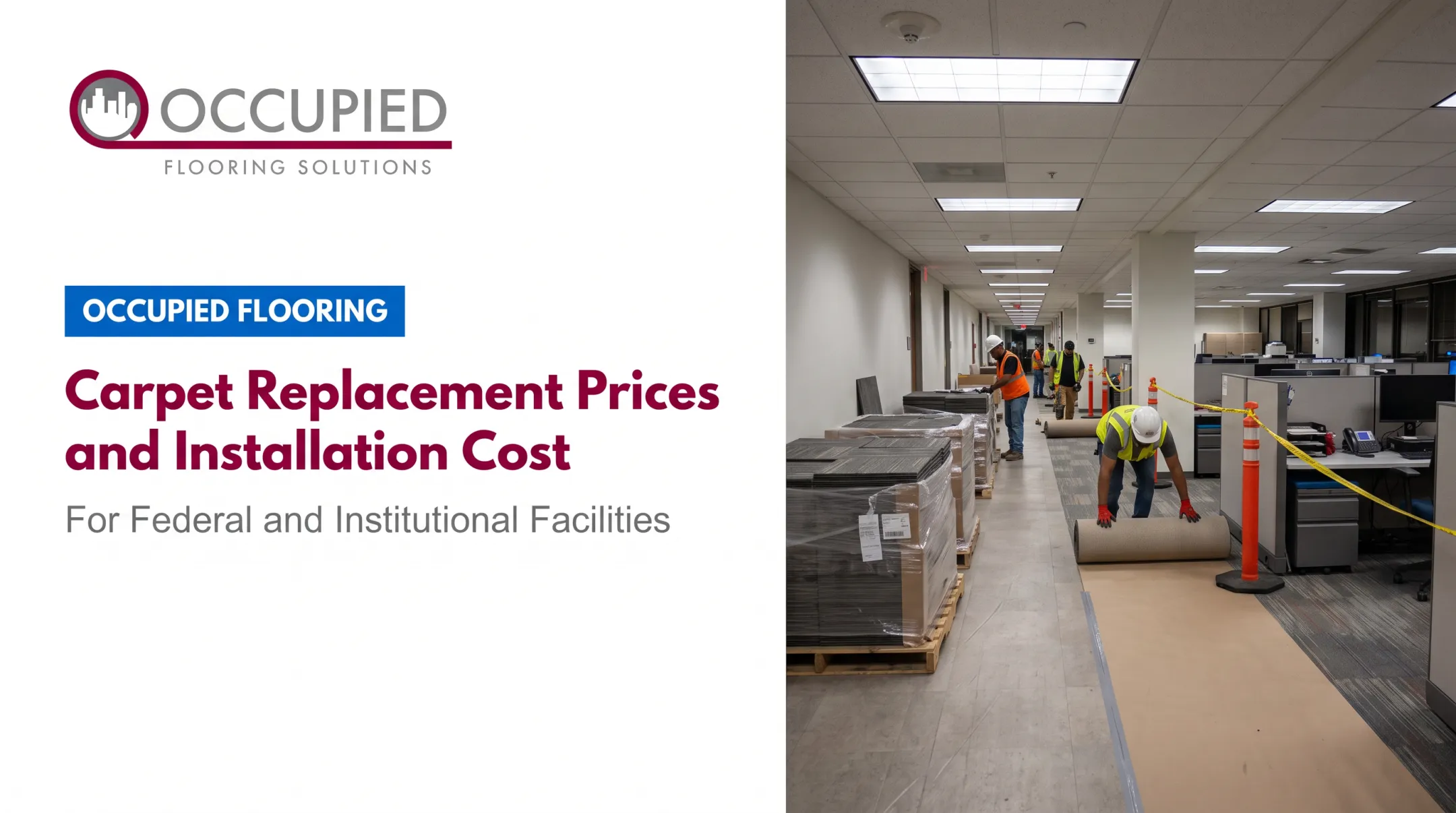
Portfolio teams running these jobs need program-level coordination, not one-off crew dispatch. Occupied Flooring Solutions manages national flooring replacement programs in active facilities, including lift-and-replace work around systems furniture so IT stays live and spaces can reopen the next business day.
Low-Cost vs. High-Cost Vinyl Replacement — What’s the Difference?
The difference between a budget-friendly project and a premium one goes far beyond the price tag.
A low-cost scenario typically involves an economical product like sheet vinyl, installed in an accessible, vacant space with a sound subfloor and minimal finishing work.
A high-cost scenario might involve a premium LVT with a lifetime warranty, installed in a complex layout with stairs. It could also be a standard project in an occupied commercial space that requires extensive subfloor leveling, after-hours labor, and phased work to keep a business running.

Here’s how they compare:
| Factor | Low-Cost Scenario | High-Cost / High-Value Scenario |
|---|---|---|
| Initial Price | Lower material and labor costs. | Higher material specs and/or complex labor drive up the price. |
| Durability | Thinner wear layer, shorter warranty. Best for low-traffic areas. | Commercial-grade wear layer, rigid core, longer warranty. Built for high traffic. |
| Lifecycle Value | May need replacement sooner. Repair can be difficult (sheet vinyl). | Designed for longevity. Plank format allows for easier repairs. |
| Moisture Resistance | Good, but seams can be a vulnerability. | Excellent, with waterproof cores and tight-locking joints. |
| Risk of Change Orders | High. Bids often exclude subfloor prep, disposal, and furniture moving. | Lower. Detailed quotes account for prep, finishing, and project logistics. |
The cheapest material doesn't guarantee the cheapest project. A low bid that omits essential prep work, disposal, or transitions will lead to change orders. Always compare quotes against an identical, clearly defined scope of work.
How to Estimate the Right Budget for Carpet-to-Vinyl Replacement
Follow these steps to build a realistic budget and choose the right partner for your project.
Measure Accurately: Measure each room's installable area, not the building's total square footage. Add 10-15% for cutting waste, and more for complex layouts or diagonal patterns.
Define Performance Requirements: Decide what the floor must handle before you compare prices. Foot traffic, moisture exposure, acoustics, and appearance determine wear layer, core type, and installation method.
Request Itemized Estimates: Ask for written quotes that break down every cost:
- Product name and specification
- Measured quantity and waste allowance
- Carpet and pad removal and disposal
- Subfloor preparation
- Installation labor
- Transitions, trim, and stair nosing
- Furniture handling, delivery, and taxes
Inspect the Subfloor: Have the installer assess the subfloor before work begins and separate required repairs from optional ones. Price potential "if-found" conditions in advance.
Define Commercial Project Conditions: For occupied commercial or multi-site work, define phasing, access hours, security procedures, dust control, and reporting in the scope. A national program management partner like Occupied Flooring Solutions standardizes this process with set pricing and a single point of accountability across the portfolio.
Compare Apples to Apples: Review at least two or three quotes for the same scope and product specifications. The lowest number is not always the best value. Reserve a 10-20% contingency for unforeseen issues.

Get the Right Flooring for Your Space and Budget
The cost to replace carpet with vinyl is driven by the full installed scope, not the shelf price of the material alone. Space condition, performance needs, and installation quality set the final number.
Build the budget around the work that protects long-term value:
- Carpet removal and disposal
- Subfloor repair and prep
- Vinyl product specification
- Transitions and finishing details
For facility and portfolio managers in commercial, institutional, or federal environments, operational continuity weighs as heavily as unit cost. Occupied Flooring Solutions runs controlled, phased programs in active facilities—from mill-direct procurement to after-hours installation—so replacement stays on schedule and on budget without disrupting operations.
Frequently Asked Questions
How much to replace carpet for a 2000 sq ft house?
For a 2,000 sq. ft. project, budget roughly $8,000 to over $44,000. Final cost depends on vinyl quality, local labor rates, and extras like stairs, complex prep, or furniture handling.
What is the average cost to remove carpet and install vinyl plank flooring?
Combined cost typically runs $3 to $22 per square foot. That usually covers carpet removal ($0.50–$1.50), vinyl ($2–$12), and labor plus basic prep ($1–$10). Confirm every step is in the quote.
Is it cheaper to replace carpet with LVP?
Entry-level carpet is often cheaper to install upfront than most LVP. LVP can still win on long-term value through durability, moisture resistance, and lower maintenance, especially in high-traffic areas.
Does replacing carpet with vinyl plank flooring increase home value?
It can, but it isn't guaranteed. Many buyers prefer hard surfaces for a clean look and easy upkeep. The National Association of Realtors' 2025 Remodeling Impact Report lists no specific cost-recovery rate for this project, so returns depend on local market trends and installation quality.
Do buyers prefer carpet or LVP in bedrooms?
Preferences vary. Some buyers love the warmth, softness, and sound absorption of new, neutral carpet in bedrooms. Others prefer the consistent look, cleanability, and allergy-friendly benefits of having LVP throughout the entire home.