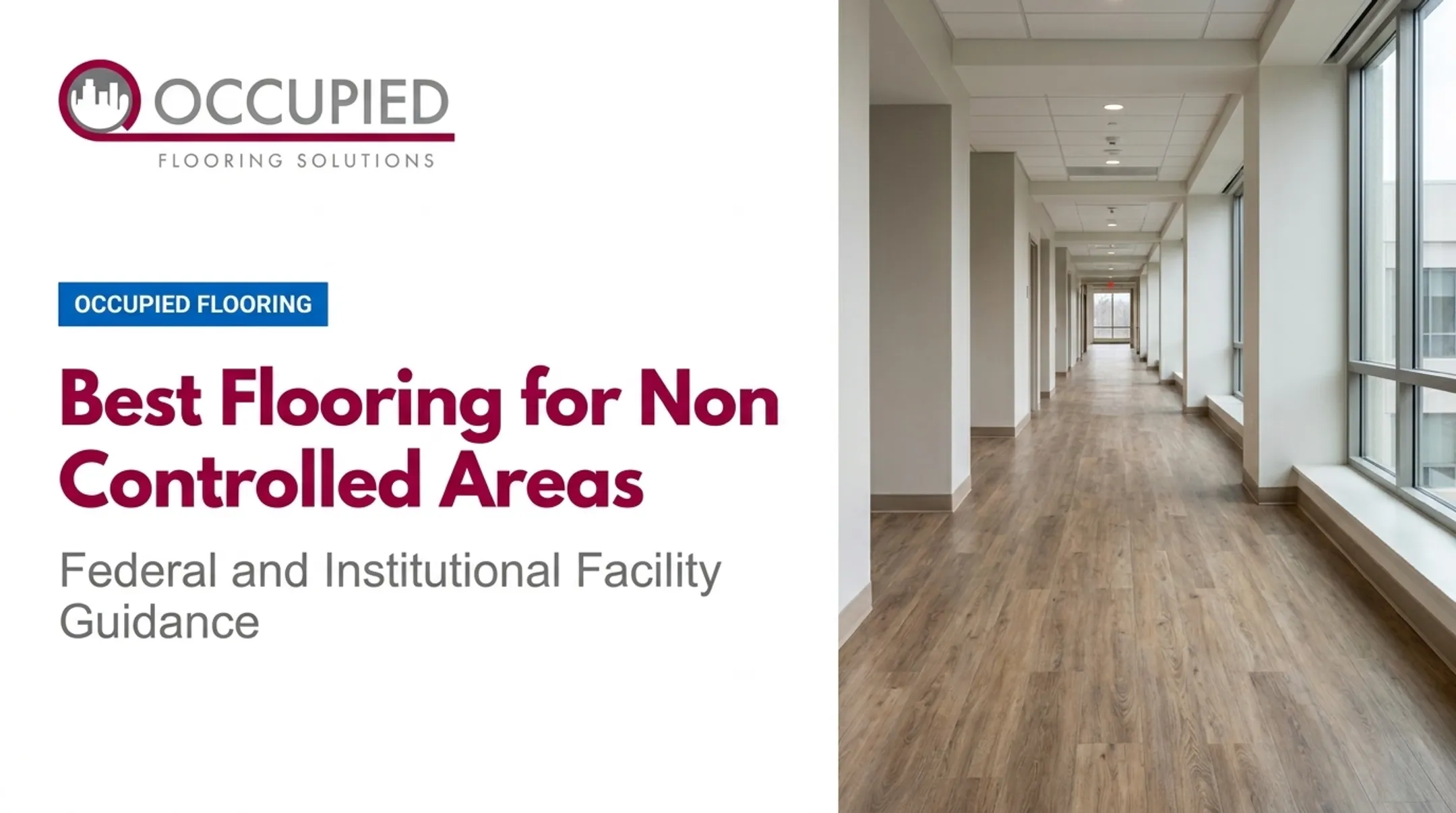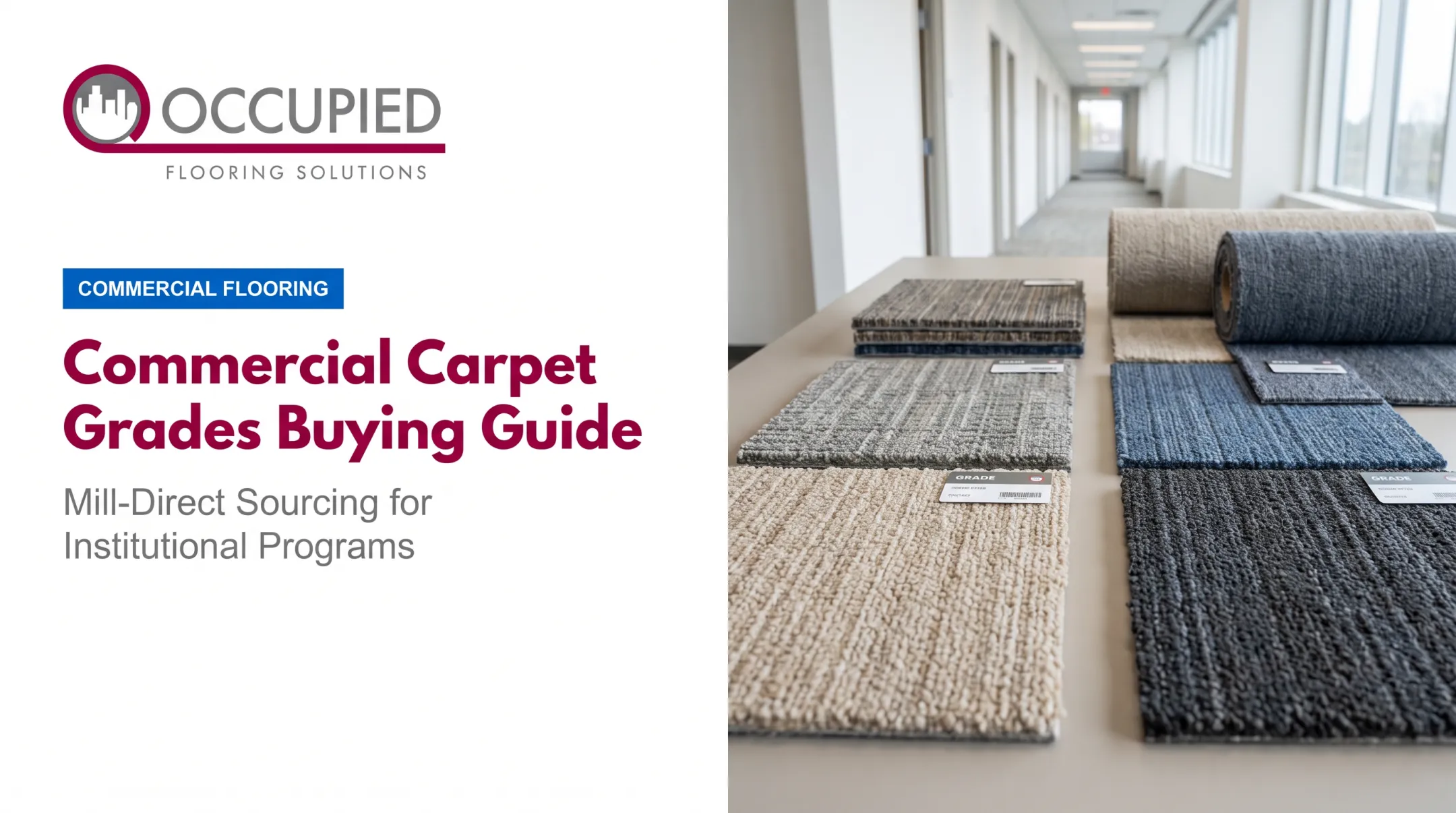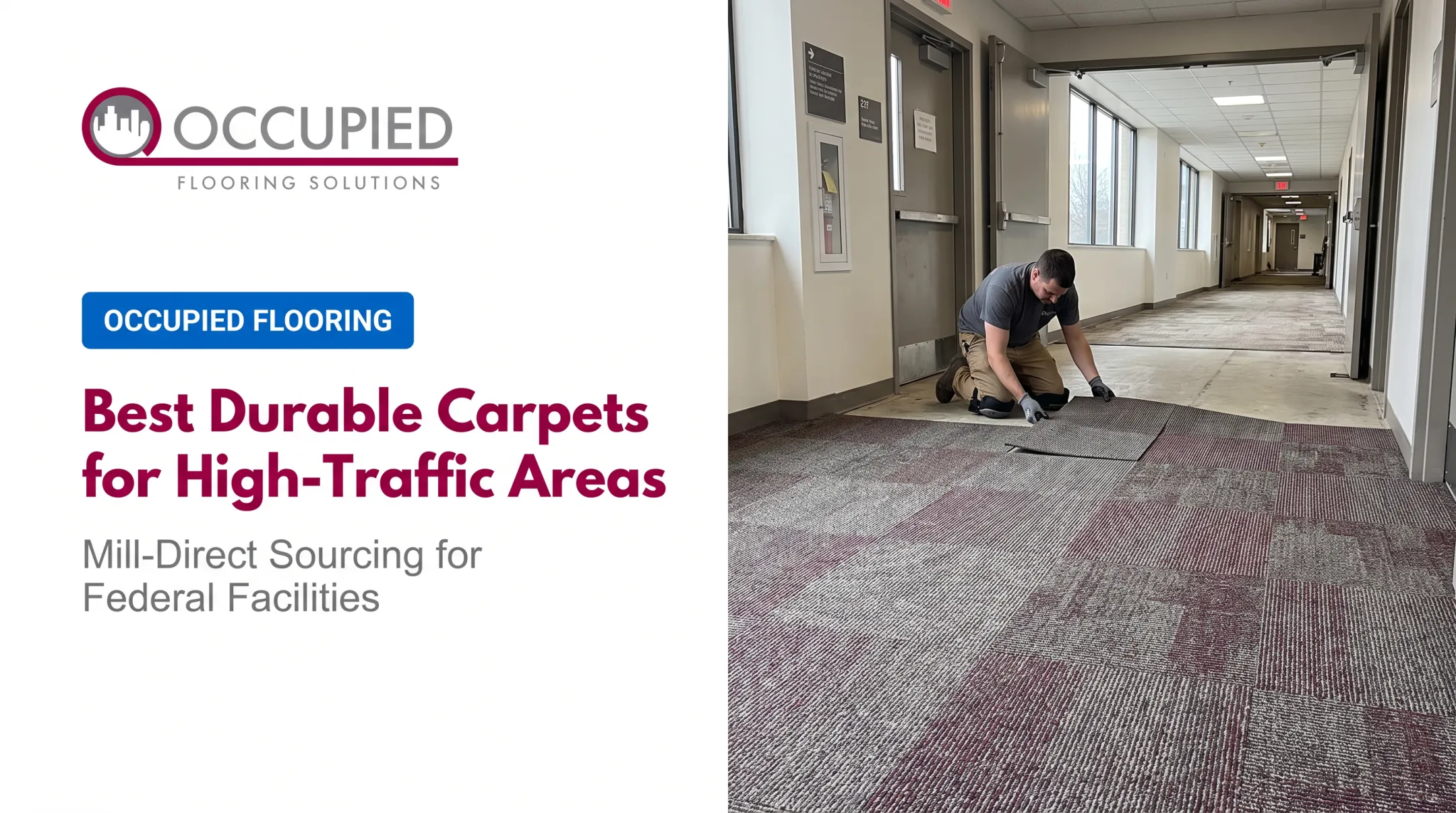

The truth: no single material is the "most durable" flooring. The right choice depends on traffic type, moisture exposure, rolling loads, cleaning routines, and budget. A tile that thrives in a lobby might crack in a warehouse. An epoxy system built for a lab won't suit a school hallway.
This guide compares the major high-traffic commercial flooring categories, their trade-offs, and what facility and portfolio teams should check before specifying anything.
Key Takeaways
- Durability spans abrasion, moisture, chemical, impact, and slip resistance—not just hardness.
- LVT, porcelain/quarry tile, epoxy/concrete, and carpet tile or rubber each solve different traffic problems.
- Installation quality and subfloor prep matter as much as the material itself.
- Multi-site portfolios need standardized specs, phasing, and lifecycle documentation to avoid costly mismatches.
What Makes Commercial Flooring Durable—and Why It Matters
High-traffic commercial flooring covers any surface exposed to frequent pedestrian movement, carts, equipment, furniture shifts, spills, or repeated deep cleaning. That includes hospital corridors, school hallways, federal office lobbies, and restaurant kitchens.
Durability is a set of performance traits, not a single rating. A floor needs to resist:
- Surface wear and abrasion from constant foot and wheel traffic
- Scratches, dents, and impact damage from dropped equipment or furniture
- Moisture penetration and standing water
- Stains and chemical exposure from cleaning agents or spills
- Slip risk under wet or greasy conditions
- Repeated commercial cleaning without losing finish or color
Specify the wrong material and the consequences show up fast: premature wear patterns near entrances, cracked tile from impact, moisture trapped under adhesive, or a slip hazard that triggers liability concerns. None of these are cosmetic issues. They force early replacement and disrupt operations.
That's why flooring decisions should weigh total lifecycle value, not sticker price. Installation cost is only one line item.
Factor in planned maintenance, sectional repairs, replacement logistics, and the cost of disrupting occupants during rework. A floor that's 15% cheaper upfront but needs full replacement in year five, with tenants or staff displaced during construction, rarely wins on lifecycle math.

Occupied Flooring Solutions builds this thinking into every program: flooring is treated as a managed capital asset with lifecycle tracking by building and asset, not a reactive maintenance line item.
Types of High-Traffic Commercial Flooring
These categories aren't a ranked list. Each solves different traffic, hazard, and appearance requirements. The right one depends on the room.
Resilient Flooring: LVT, Sheet Vinyl, and Similar Products
Luxury vinyl tile (LVT) and commercial sheet vinyl offer design flexibility (wood, stone, or tile looks) with straightforward cleaning and solid resistance to everyday foot traffic, scuffs, and stains.
LVT commonly fits offices, corridors, healthcare common areas, schools, and retail. But not all vinyl is equal: Karndean's commercial collections, for example, range from a 12-mil wear layer with a 10-year warranty up to a 30-mil layer backed by a 20-year commercial warranty, depending on the product line.
Always verify the specific wear layer, slip rating, moisture tolerance, and warranty terms for the product being specified. Don't assume one vinyl performs like another.
Trade-offs to watch:
- Severe impacts, poor subfloor prep, or bad adhesive choices can cause premature failure
- Heat and moisture exposure beyond the product's rating shortens service life
- Rolling loads (carts, equipment) need a product rated for dynamic loading, not just foot traffic
- Sheet vinyl reduces seams and suits infection-control settings; modular LVT simplifies spot repairs
Hard-Surface Tile: Porcelain, Ceramic, and Quarry Tile
Porcelain and ceramic tile resist wear, water, and frequent cleaning exceptionally well. Porcelain's water absorption sits at 0.5% or less, making it a strong fit for lobbies, restrooms, corridors, and moisture-prone entrances.
Quarry tile is the workhorse for commercial kitchens and service areas exposed to grease and heavy cleaning cycles. Some quarry products carry abrasive-surface finishes specifically for kitchen slip control.
Before specifying tile, check:
- Slip rating for the actual use—TCNA's guidance on ANSI A326.3 notes that a wet DCOF of 0.42 doesn't certify performance against grease or oil; that requires a manufacturer-declared "Oils/Greases" rating
- Impact resistance, since hard tile can crack under dropped equipment
- Grout maintenance schedule and sealing requirements
- Substrate prep, since tile demands flat, properly cured surfaces and compatible setting materials
Tile also feels harder underfoot and transmits more sound, which matters in spaces where acoustic comfort is a priority.
Seamless and Heavy-Duty Systems: Epoxy, Polished Concrete, and Concrete Surfacing
Epoxy coatings and properly prepared polished or coated concrete deliver seamless coverage, strong chemical and abrasion resistance, and an easy-to-clean surface. These systems suit:
- Warehouses and distribution centers
- Laboratories and production areas
- Garages and service bays
- Select healthcare and institutional back-of-house spaces
Chemical resistance varies widely by product. One commercial epoxy system reports resistance to acids, alkalis, fuels, and grease with a measured abrasion loss under lab testing, but that result belongs to that specific system, not epoxy in general. Always request project-specific chemical-resistance data for the disinfectants or solvents actually used on site.
Concrete preparation is non-negotiable. Slab moisture testing, crack repair, and correct curing time directly affect coating adhesion and longevity. Skip this step and you risk disbondment. These systems also aren't the right call where warmth, softer acoustics, or fast reoccupation matter more than chemical resistance.

Modular Soft-Surface and Specialty Flooring: Carpet Tile and Rubber
Commercial carpet tile supports acoustics, comfort, and wayfinding while letting worn or stained sections get replaced without tearing out an entire broadloom install.
Industry model specifications call for minimum tuft bind strength and dimensional stability. Appearance retention depends heavily on the cleaning program, though: accumulated dry soil shortens carpet life faster than foot traffic alone.
Rubber flooring fits gyms, healthcare settings, and labs where cushioning, impact absorption, noise control, or slip resistance top the list.
A gym-rated rubber tile built for dropped-weight impact isn't automatically the right choice for a hospital corridor with different rolling-load and cleaning demands. Match the product to the room, not the category.
Watch for:
- Carpet's vulnerability to moisture and staining in high-spill zones
- Rubber's odor off-gassing and more limited design palette
- Whether the specific product is rated for your facility's actual traffic and cleaning chemicals
How to Choose the Right Commercial Flooring Option
Start with the traffic profile, not the product catalog.
- Identify the traffic type. Pedestrian-only corridors have different demands than areas with wheeled carts, systems furniture, pallet jacks, or continuous equipment movement.
- Assess environmental and safety conditions. Factor in moisture, standing water, grease, chemicals, temperature swings, and slip risk. The ADA Access Board requires firm, stable, slip-resistant surfaces; transitions up to ¼ inch need no treatment, up to ½ inch may be beveled, and steeper changes need a ramp.
- Compare full lifecycle cost, not just purchase price. Include installation, subfloor prep, maintenance labor, repairability, and downtime. An IFMA comparison cites LVT at $6–8 per square foot installed, with 10-year maintenance under $10 per square foot; treat it as a benchmark, then build your own estimate.
- Review product specs closely. Wear layer or coating thickness, seam strategy, adhesive/grout compatibility, moisture testing results, and installer qualifications all affect real-world performance.
- Standardize across multi-site portfolios. Approved material catalogs, coordinated procurement, and phased scheduling prevent one property from installing a product that fails where another location's identical space succeeds.

This is where portfolio-level program management earns its keep. Occupied Flooring Solutions' National Flooring Program standardizes installation methodology, phasing, and reporting across an entire portfolio, with set pricing and volume-based negotiated rates.
Instead of negotiating flooring site-by-site, multi-state facility teams get:
- One point of accountability
- A pre-approved materials catalog
- Consolidated performance reporting
That model serves GSA-leased assets, federal portfolios, and institutional real estate platforms alike.
What to Check Before Finalizing a Flooring Type
Don't select a material just because it's marketed as "commercial-grade" or "heavy-duty." Those terms carry no standardized meaning. Instead:
- Demand product documentation with test results for your actual traffic, moisture, chemical, and slip conditions—not a generic durability claim
- Confirm installation readiness: moisture testing, floor flatness, crack repair, acclimation, adhesive or grout choice, and protection of adjacent occupied space
- Define the post-install operating plan: cleaning procedures, inspection intervals, replacement stock, repair roles, and warranty documentation
For occupied facilities or multi-site portfolios, add a phased response plan.
Occupied Flooring Solutions' lift-and-replace approach sequences work floor-by-floor or zone-by-zone in fully occupied buildings. That protects daily operations, security protocols, and tenant activity while the floor comes up and goes back down.
Conclusion
The most durable commercial flooring option is the one that matches your traffic, environmental exposure, safety requirements, and maintenance capacity. Resilient flooring, tile, seamless systems, carpet tile, and rubber each bring a different mix of durability, comfort, repairability, and lifecycle cost.
Before you specify a product, assess the conditions that drive performance:
- Traffic type and volume
- Moisture and chemical exposure
- Cleaning capacity and schedule
- Budget and lifecycle cost targets
For property, facilities, construction, and portfolio teams managing flooring across occupied or multi-site environments, Occupied Flooring Solutions coordinates standardized programs, phased execution, and national accountability. That model replaces flooring without disrupting the people who use the space every day.
Frequently Asked Questions
What is the best flooring for high-traffic areas?
It depends on traffic type, moisture, safety needs, and maintenance capacity. LVT suits offices and corridors, porcelain or quarry tile handles wet or greasy zones, epoxy/concrete fits industrial spaces, and carpet tile or rubber work best where comfort and acoustics matter.
What is the most durable flooring for high-traffic areas?
Surface hardness isn't the whole story. Porcelain or quarry tile and epoxy/concrete systems resist abrasion and chemicals well, while resilient flooring and modular carpet tile offer easier repair and better comfort. Durability depends on which failure mode matters most in your space.
Is LVP (luxury vinyl plank) good for high-traffic areas?
Commercial-grade LVP works well in offices, corridors, healthcare, education, and retail settings. Verify the specific wear layer, installation method, moisture rating, rolling-load tolerance, and maintenance requirements before specifying, since these vary between product lines.
What type of flooring is best for a high-traffic kitchen?
Quarry tile is the traditional choice for grease, hot water, and heavy cleaning, porcelain tile is an alternative if the finish suits the room. Confirm slip resistance under oil and grease specifically, since standard wet-DCOF ratings don't certify that condition.
What is the best floor finish for heavy traffic?
The right finish depends on the substrate: factory wear layers for resilient flooring, sealers or protective coatings for tile, and specified epoxy systems for concrete. Match the finish to manufacturer specifications and your actual cleaning chemicals, not a generic "heavy-duty" label.
What is the best flooring for high moisture areas?
Porcelain or quarry tile, moisture-rated sheet vinyl, and appropriate LVT all perform well when installed correctly. Seams, subfloor moisture levels, drainage, and slip resistance all need evaluation, since water resistance for resilient flooring depends heavily on construction and installation quality.