
Introduction
Hygienic vinyl flooring isn't just about the material rolling off the truck. Surface porosity, seam quality, moisture exposure, cleaning chemistry, and installation craftsmanship decide whether a floor performs the way the spec sheet promises.
Facility managers, property managers, contractors, and institutional teams need a surface that handles daily disinfection without trapping moisture, harboring contaminants, or failing at the seams—especially in spaces that stay open during work.
This guide compares sheet vinyl, luxury vinyl tile (LVT), and luxury vinyl plank (LVP), then covers specification, installation, maintenance, and the extra complexity of replacing floors in occupied facilities.
Key Takeaways
- Vinyl’s smooth wear layer cleans easily, but no product is automatically antimicrobial or seamless.
- Sheet vinyl cuts joints; glue-down LVT aids repair; click LVP/LVT favors speed over seam control.
- Choose by moisture, traffic, disinfectant exposure, and facility standards—not product labels alone.
- Treat seams, cove bases, and substrate prep as equal to product choice for hygienic performance.
What Makes Vinyl Flooring Hygienic?
A hygienic vinyl floor doesn't absorb moisture readily, tolerates approved cleaning procedures, resists expected wear and chemicals, and minimizes places where soil can hide. That's a practical definition, not a marketing claim.
Non-Porous Doesn't Mean Maintenance-Free
Manufacturers use terms like non-porous, waterproof, antimicrobial, disinfectable, and low-emission almost interchangeably in marketing copy. They aren't the same thing.
Each claim has a specific, verifiable meaning, and each requires its own documentation. Always check the technical data sheet rather than assuming one certification covers another.
Seams and Joints Are the Real Weak Point
A plank's top surface might resist water completely. That doesn't mean the floor does. Seams, perimeter gaps, transitions, and damaged edges remain the most common entry points for moisture and debris, regardless of how the wear layer performs.
Chemical Resistance and Approved Disinfectants
Facilities that clean frequently need vinyl rated for their specific disinfectant program. Before specifying a product, confirm:
- Approved disinfectants and required dilution ratios
- Minimum dwell time for effective disinfection
- Restrictions on abrasive tools or harsh solvents
- Slip-resistance and stain-resistance ratings under wet conditions
Antimicrobial Additives Aren't a Substitute for Cleaning
Antimicrobial vinyl protects the material itself from bacterial growth on its surface. It does not replace routine cleaning, spill response, or infection-control protocols.
The CDC's environmental services guidance found no demonstrated infection-control advantage from extraordinary routine floor disinfection compared to standard detergent-and-water cleaning. Consistent cleaning routines still matter more than any additive.
Which Vinyl Flooring Format Is Most Hygienic?
Sheet vinyl is usually the most hygienic choice: large continuous runs mean the fewest seams and the lowest moisture risk when heat-welded. Format still affects repair paths and long-term serviceability—here's how the three main options compare.
| Format | Seam Frequency | Moisture Exposure | Repairability | Best For |
|---|---|---|---|---|
| Sheet vinyl | Lowest (large continuous runs) | Low, especially with heat welding | Requires full-section replacement | Healthcare, labs, restrooms |
| Glue-down LVT | Moderate, but controlled | Moderate | High, individual tile replacement | Retail, offices, corridors |
| Click LVP/LVT | Highest (interlocking joints) | Depends on subfloor and perimeter seal | Moderate | Residential, light commercial |
Sheet Vinyl for Sanitation-Sensitive Spaces
Sheet vinyl is often specified for healthcare, education, laboratory, and restroom applications because large rolls cut the number of joints.
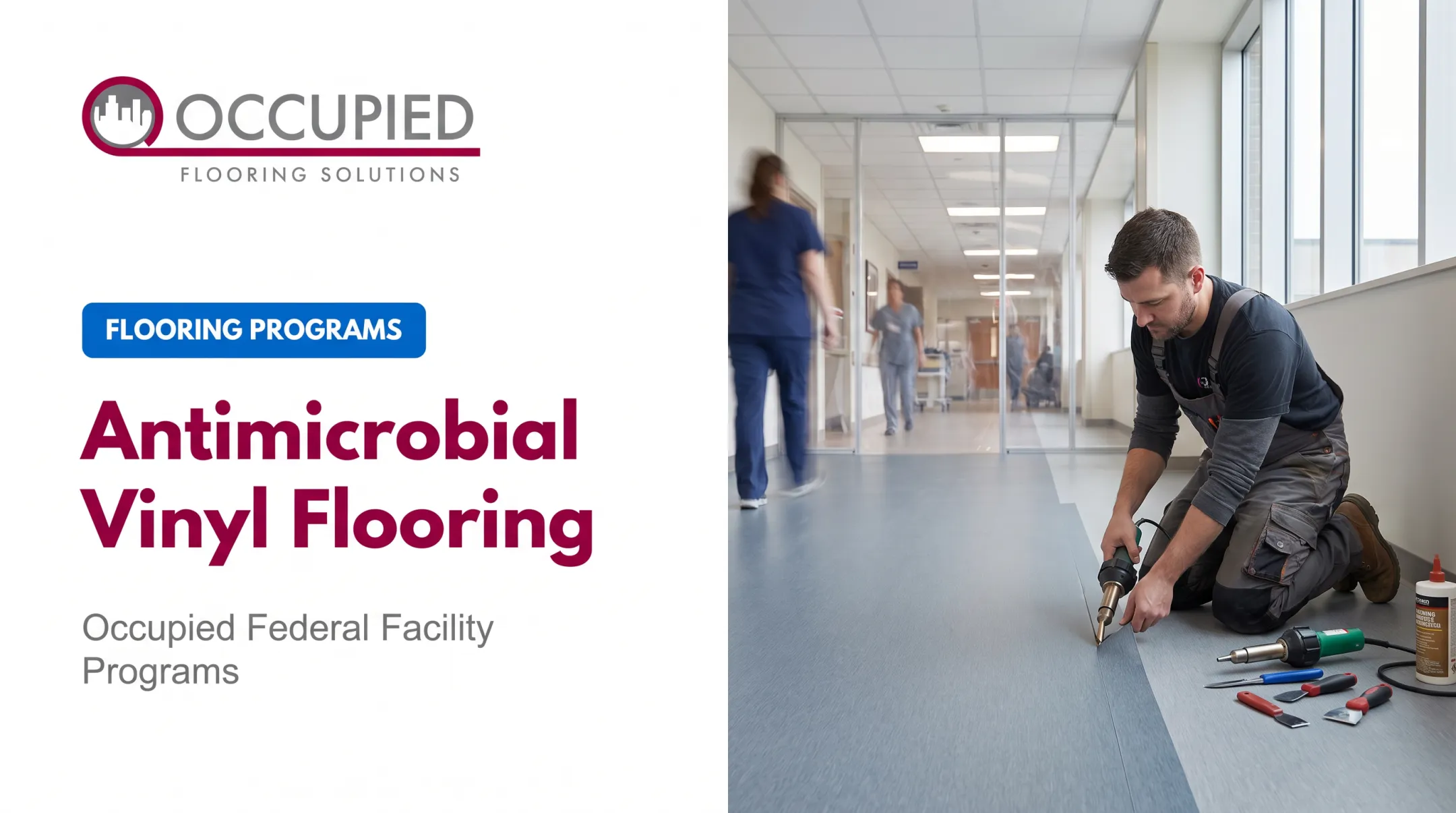
When correctly installed, heat-welded seams close the gap between panels more effectively than chemical welding, especially under sustained moisture or heavy rolling loads. Flash coving at the wall base further limits where soil and liquid can collect.
Glue-Down LVT: Controlled Seams with Repairability
Glue-down LVT offers tighter, more predictable seams than click systems. Damaged tiles can be replaced individually without tearing up the whole floor.
Success still depends on substrate condition and adhesive compatibility, so manufacturer seam and cleaning guidance isn't optional.
Click LVP/LVT: Convenience with Trade-offs
Floating LVP and LVT create the most interlocking joints, so hygiene performance hinges on underlayment quality, subfloor moisture, and perimeter seals. They install quickly and fit offices, homes, and moderate-traffic commercial spaces.
Review moisture below the floor and perimeter gaps carefully before specifying click systems in wet or sanitation-critical areas.
When Vinyl Isn't the Right Answer
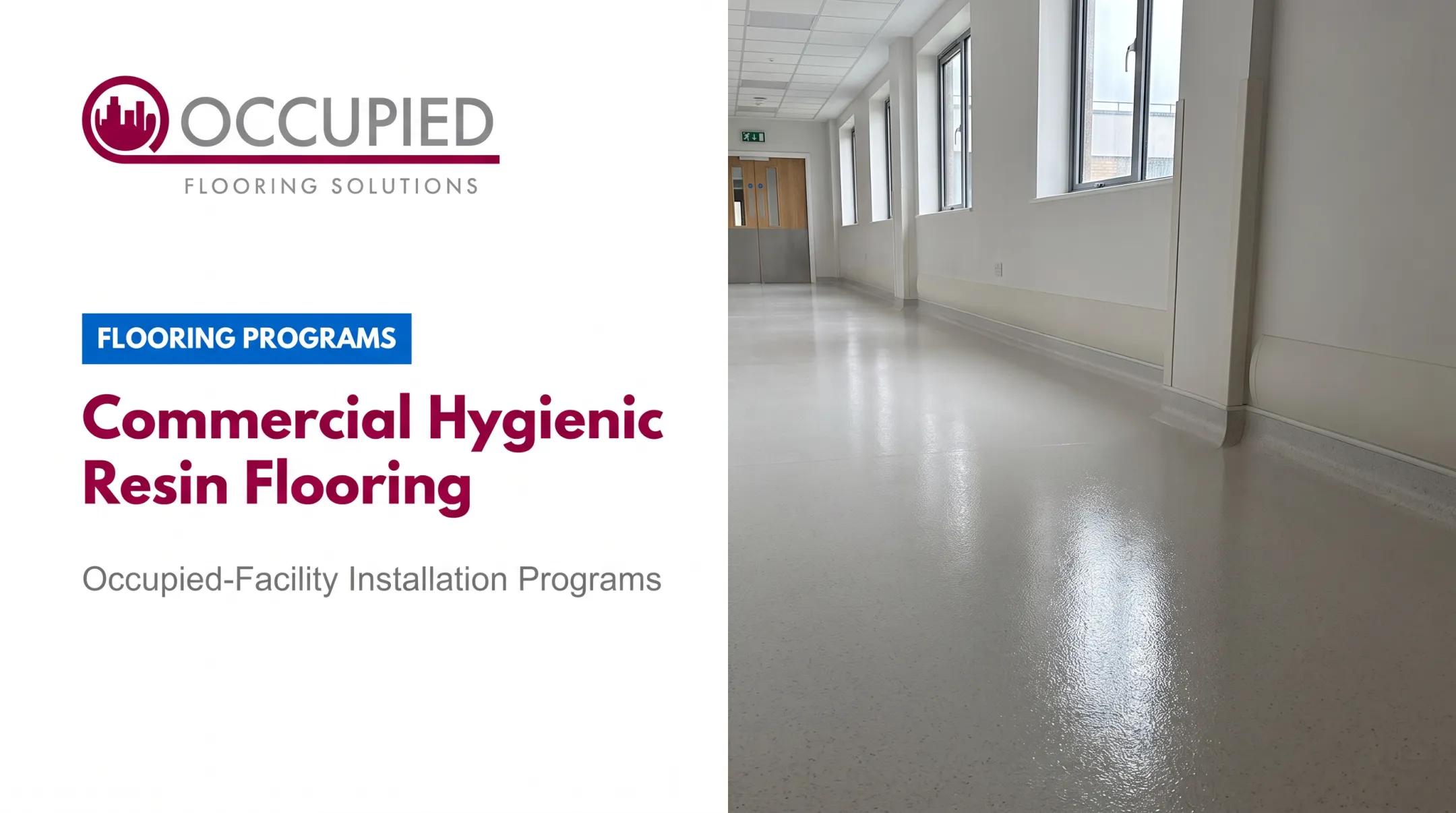
Vinyl isn't universal. Environments requiring monolithic resinous flooring, integral cove bases, frequent washdown, extreme chemical exposure, or highly specialized regulatory compliance may need a different system entirely. When in doubt, consult the facility's governing standard or the flooring manufacturer directly rather than assuming vinyl will meet every requirement.
How to Specify and Install Hygienic Vinyl Flooring
Getting the product right matters less than getting the installation right. A premium vinyl product installed over a wet, uneven substrate will fail regardless of its specs.
Build a Pre-Purchase Checklist
Before selecting a product, document:
- Moisture levels and expected traffic patterns
- Rolling load requirements (carts, equipment)
- Cleaning frequency and disinfectant chemistry
- Slip-resistance and acoustical needs
- Expected service life and repair strategy
Request the Right Documentation
Ask every manufacturer for:
- Technical data sheet
- Safety data sheet
- Installation instructions
- Cleaning guide
- Warranty limitations
- Applicable emissions certifications
Skipping this step is how mismatched products end up on the floor.
Substrate Prep and Moisture Testing
Substrate failures compromise seams, adhesives, and cleanability long before the vinyl itself wears out. ASTM F710 covers concrete floor preparation before resilient flooring goes down. It includes moisture testing, pH testing, and flatness verification. Incomplete prep is a common cause of adhesive failure and lifted seams.
Seam and Edge Details
Hygienic performance depends on seam and edge execution:
- Heat-welded seams where sheet vinyl is specified
- Correctly fitted LVT joints with manufacturer-approved adhesive
- Sealed transitions at doorways and thresholds
- Flash coving where the facility standard requires it
- Detailed seals at drains, fixed equipment, and wall junctions
A Simple Decision Framework
- Choose sheet vinyl when minimizing joints is the top priority.
- Choose glue-down LVT when repairability and design flexibility matter more.
- Choose click LVP/LVT when installation speed and light-commercial or office suitability outweigh joint concerns.
In occupied facilities, lock these details into a phased install plan so moisture testing, welding, and cure times happen without disrupting active operations.

How to Clean and Maintain Vinyl Flooring Hygienically
Even a well-installed vinyl floor stays hygienic only when cleaning matches the facility’s traffic, soil load, and environmental-cleaning requirements.
Baseline Cleaning Routine
- Remove loose soil with dry dust mopping or vacuuming.
- Address spills immediately, before they penetrate seams.
- Damp mop with the manufacturer-approved solution.
- Observe required disinfectant dwell time when disinfection is needed.
- Allow the floor to dry fully according to product guidance.
Aggressive Chemicals Can Damage the Floor
More aggressive cleaning chemicals don't automatically clean better. They can damage the wear layer, void warranties, or degrade seams over time. Stick to products the manufacturer explicitly approves for that specific floor.
Preventive Maintenance Habits
- Place entrance matting at exterior doors to trap grit before it scratches the surface.
- Use furniture pads to prevent gouging under heavy loads.
- Repair damaged sections or failed seams promptly, before moisture gets underneath.
- Avoid abrasive pads or tools that roughen the wear layer.
Institutional Standards Differ from Household Cleaning
Healthcare, laboratory, food service, education, and government facilities should align floor care with their written environmental-cleaning protocols, not general household advice. For multi-site or regulated environments, keep cleaning logs. Record product, dilution, frequency, and any visible damage to support compliance and warranty claims.
Hygienic Vinyl Flooring for Occupied Commercial and Multi-Site Facilities
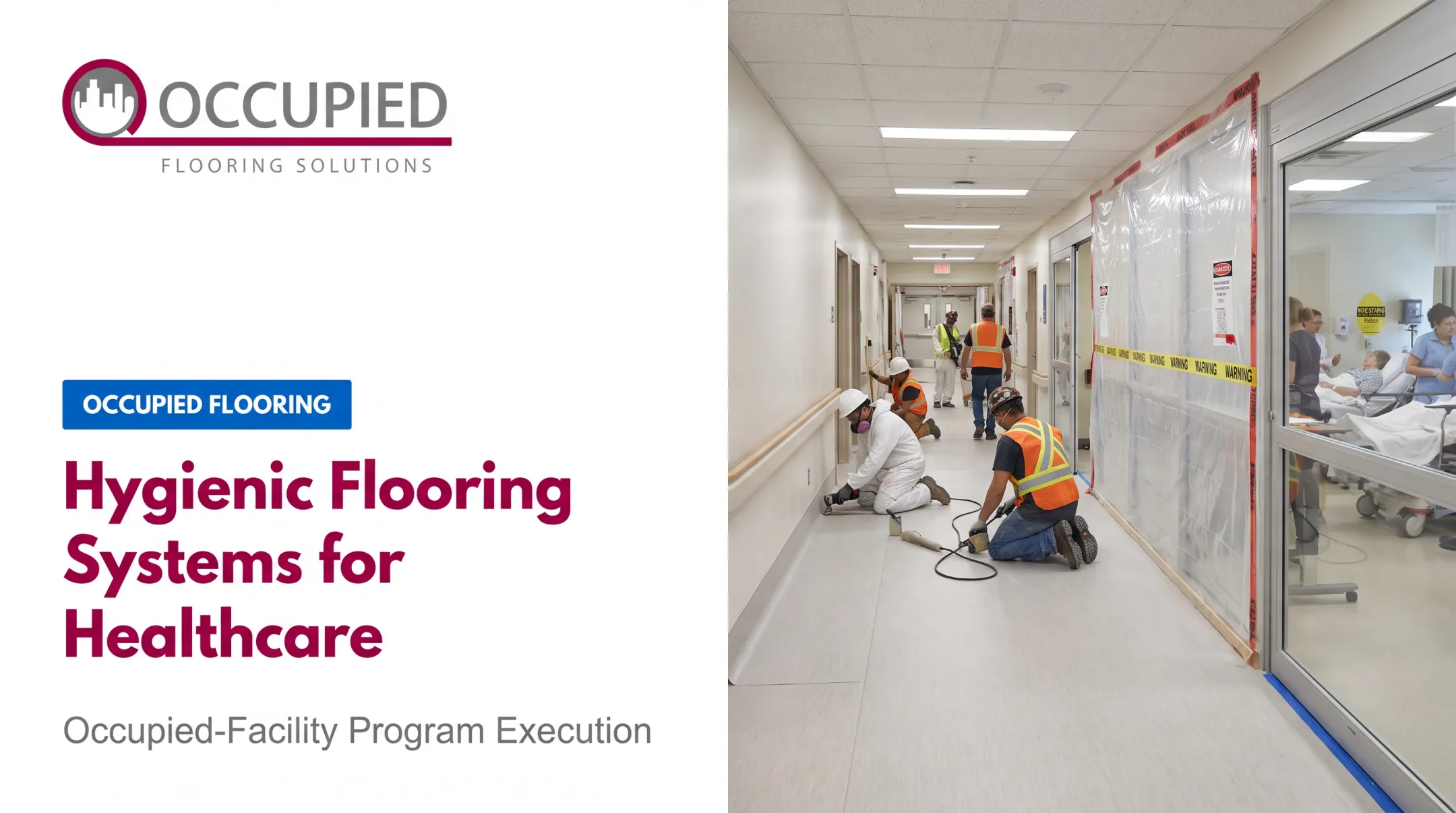
Replacing flooring in an active office, government building, or multi-tenant property adds a layer of complexity that specification sheets don't cover. Phased work areas, furniture coordination, dust control, and occupant communication all affect whether the finished floor performs hygienically from day one.
A structured flooring program protects both hygiene and continuity through:
- Standardized products across every location
- Approved installation details, applied consistently
- Documented cleaning protocols from the start
- Punch-list inspections before spaces return to service
- A central record of warranties and repairs across the portfolio
Occupied Flooring Solutions works with federal agencies, GSA-leased asset owners, institutional real estate operators, and multi-site commercial portfolios on exactly this kind of controlled renovation. Its occupied-facility methodology lifts workstations and cubicles rather than dismantling them. Electrical and IT systems stay live while flooring runs in defined micro-phases, so spaces return to full operation the next business day.
Across more than 1,230 completed projects and 15 million square feet installed, that phased approach minimizes disruption in active federal, healthcare, and institutional environments. This kind of program management supports hygienic outcomes; it doesn't replace product-specific requirements around seams, substrate prep, or approved disinfectants.

Before awarding occupied-facility flooring work, ask any potential partner:
- What's their track record in occupied environments specifically?
- How are installers qualified and vetted?
- What schedule and quality controls are in place?
- How do they coordinate safety and security requirements?
- What happens if materials are delayed or an issue arises mid-project?
- What reporting and post-installation support do they provide?
Frequently Asked Questions
Is there any vinyl flooring that is not toxic?
"Non-toxic" isn't a standardized product category. Review verified emissions certifications like FloorScore or GREENGUARD Gold, manufacturer disclosures, and adhesive specifications instead of relying on marketing language alone.
What is the best way to sanitize vinyl floors?
Remove loose soil, apply a cleaner or disinfectant compatible with that specific product, follow the labeled dilution and dwell time, and let the floor dry fully. Always defer to the flooring manufacturer's care instructions over generic advice.
What type of floor is the easiest to keep clean?
Smooth, non-absorbent floors with minimal seams are generally easiest to maintain. Installation quality, cleaning access, foot traffic, and the facility's actual cleaning protocol all influence real-world performance just as much as the material itself.
What is the healthiest flooring for a commercial or institutional space?
There's no single healthiest floor for every facility. Compare low-emission documentation, cleanability, moisture exposure, slip safety, and occupant needs against your space's requirements before choosing between vinyl and other hard-surface options.