
Commercial hygienic resin flooring offers a powerful solution. It’s a seamless or minimally-jointed, non-porous system designed from the ground up to support modern cleaning protocols, control contamination, and withstand heavy use. But selecting the right system goes far beyond picking a product name. It requires a deep understanding of your facility’s specific needs.
This guide provides the essential buying criteria you need to consider, from hygiene and cleanability to traffic exposure, installation planning, and true lifecycle value, especially in an occupied facility.
Key Takeaways
- True hygienic performance depends on the entire flooring system—resin chemistry, surface texture, cove bases, drains, and substrate preparation—not just a brand name.
- Epoxy, polyurethane, and cementitious urethane systems serve different needs. Your choice should be dictated by your facility's cleaning, traffic, moisture, and temperature conditions.
- A seamless floor simplifies cleaning, but it doesn't replace the need for documented sanitation procedures and a quality-controlled installation.
- Renovations in occupied facilities demand meticulous planning around phasing, access control, and cure times to protect business continuity.
Why Hygienic Resin Flooring Suits Commercial Environments
When correctly specified, resinous flooring systems provide a surface that actively supports the operational demands of a commercial or institutional building. Their value comes from a combination of finish, durability, and safety features.
Seamless and Non-Porous Surfaces
The primary advantage of a resin floor is its monolithic surface. Unlike tile, with its grout lines, a seamless floor minimizes joints and porous areas where dirt, moisture, and microbes can collect.
Cleaning is more effective because debris stays on the surface instead of trapping in crevices or penetrating the substrate. Routine sweeping, mopping, and compatible disinfectants become simpler and more efficient.
"Seamless" does not mean zero details. Pipe penetrations, transitions to other flooring, and joints at walls or drains still need careful sealing to protect system integrity.
Durability and Resistance
Commercial environments put floors under constant stress. A correctly specified resin system is built to handle that load:
- Abrasion resistance: High-traffic corridors and wheeled equipment need low wear; some high-performance epoxies show only 90 mg loss under ASTM D4060 testing.
- Chemical resistance: Match the system to your cleaning agents, disinfectants, oils, and process chemicals—including concentration and temperature.
- Moisture resistance: A non-porous surface keeps liquids out of the slab, limiting degradation and contamination below the finish.
Customizable Safety Features
Resin floors can be specified for slip resistance by broadcasting aggregate or using a textured finish. That raises the coefficient of friction and improves traction in wet and dry conditions.
There is a trade-off: a more aggressive texture is harder to clean. Match slip-resistance level to each area’s risk profile rather than applying one texture building-wide.
Lifecycle Value and Longevity
No floor lasts forever, but some resin systems deliver long service lives. High-performance cementitious urethane floors, for example, have been documented in a Sika white paper at 20 to 30 years in demanding food and beverage environments.

Total cost of ownership often favors resin when you factor in lower cleaning labor, fewer repairs, and longer intervals between full replacement.
A Note on Antimicrobial Additives: Some floors are marketed with antimicrobial additives. While these may inhibit odor or staining on the floor itself, the EPA restricts claims about protecting users from pathogens. Furthermore, the CDC reports no demonstrated advantage from routine floor disinfection over standard detergent-and-water cleaning for reducing healthcare-associated infections. Treat these additives as a secondary feature, not a substitute for proper cleaning protocols.
Where Commercial Hygienic Resin Flooring Is Used
Match the system to operating conditions, not just the building type. A hospital corridor and a commercial kitchen need different performance profiles.
- Healthcare and clinical spaces: Patient corridors, labs, and pharmacies need abrasion resistance, stain resistance, and floors that hold up to rigorous cleaning protocols.
- Commercial kitchens and food service: Must handle thermal shock, constant moisture, and aggressive degreasers. Sealed coves and proper drainage are required under the FDA Food Code.
- Institutional facilities (schools, government buildings): High foot-traffic durability plus simple maintenance for custodial teams.
- Restrooms and wet rooms: Seamless, waterproof systems with integral cove bases keep water out of walls and subfloors.
- Utility and back-of-house areas: Mechanical rooms, docks, and storage need impact- and abrasion-resistant surfaces that tolerate incidental spills.
How Resin Compares to Other Floors
Compare how each surface handles hygiene, moisture, chemicals, and maintenance—not only how it looks on day one.
| Comparison Surface | Key Differences from a Hygienic Resin System |
|---|---|
| Ceramic/Quarry Tile | Contains thousands of feet of porous grout lines that can harbor dirt and bacteria. Grout can crack, stain, and is chemically vulnerable. |
| Bare/Sealed Concrete | Concrete is inherently porous and can absorb moisture and contaminants. It is also susceptible to staining and damage from acidic or caustic chemicals. |
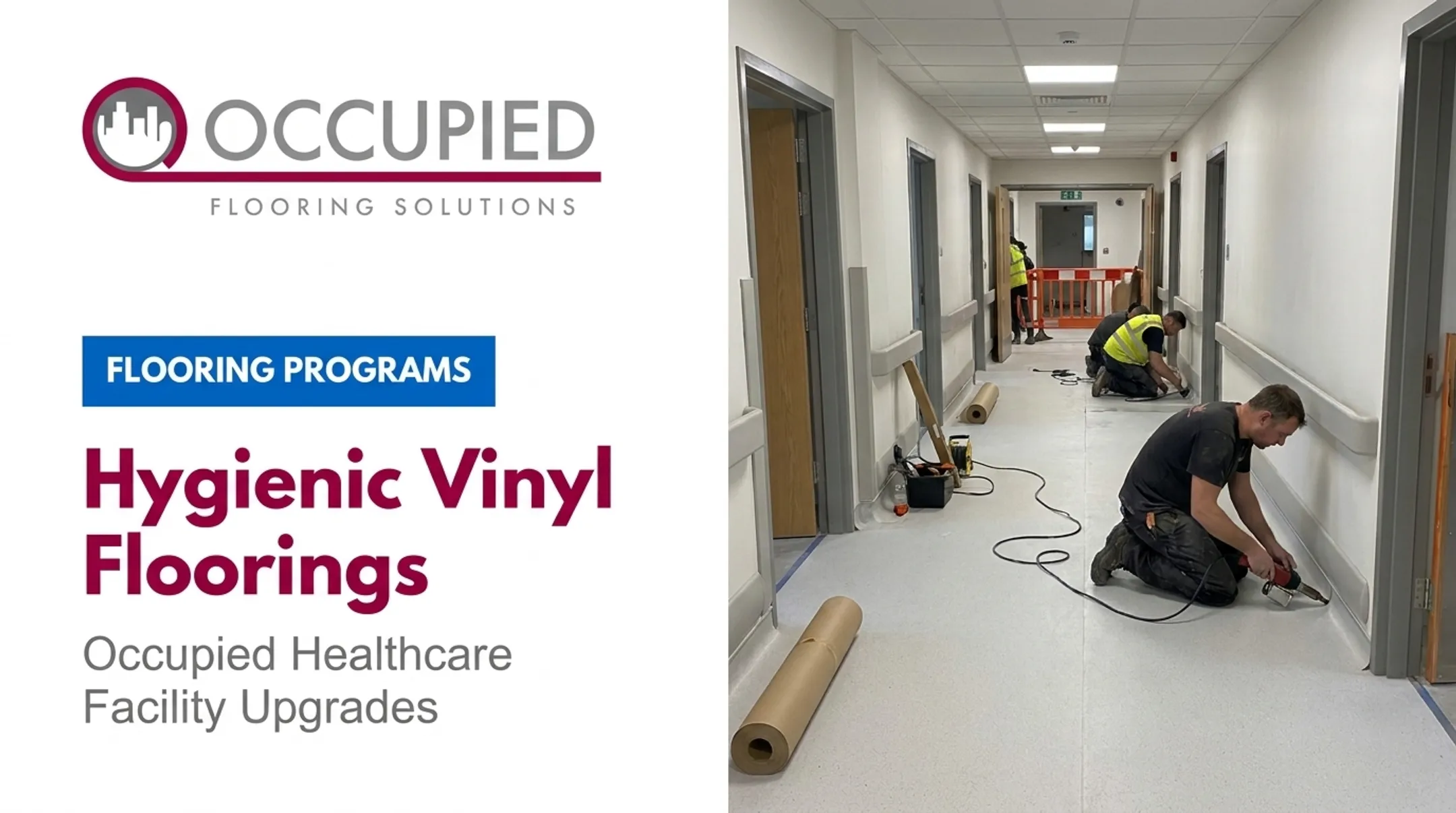
| Vinyl Sheet Flooring (VSF) | While it has fewer seams than tile, the heat-welded seams can still fail under stress. The adhesive is also a point of failure if the concrete substrate has moisture issues. |
| Vinyl Composition Tile (VCT) | Contains hundreds of seams between tiles. Requires frequent stripping and waxing, adding significant labor and material costs to its lifecycle. |
Resin usually leads on hygiene and durability. Tile, concrete, or vinyl can still win on budget, acoustics, or design—if lifecycle cost, cleaning labor, and downtime still pencil out for the space.
How to Specify the Right Hygienic Resin Flooring System
A successful installation starts with a thorough specification process. This ensures the chosen system matches the demands of the environment and is installed on a properly prepared substrate.
Start with a Project Discovery Checklist
Before you even look at products, you need to define your requirements.
- Function: What is the room used for?
- Traffic: What traffic will it see (foot, carts, forklifts), including wheel types and loads?
- Exposure: Will it be exposed to moisture, extreme temperatures, thermal shock, or specific chemicals?
- Cleaning: How will it be cleaned, how often, and with what chemicals and equipment?
- Downtime: How much downtime is acceptable for installation and curing?
- Substrate: What is the condition of the existing concrete slab?
- Details: Are cove bases, trench drains, or specific slip resistance ratings required?
Compare Common Resin Chemistries
Different resins have different strengths. Your specification should be driven by performance needs, not by loyalty to a single chemistry.
- Epoxy: Strong balance of durability, chemical resistance, and cost for corridors, labs, light manufacturing, and institutional spaces with medium-to-heavy wear.
- Polyurethane (PU): Often used as a topcoat over epoxy; strong abrasion resistance, UV stability (no yellowing), and flexibility.
- Cementitious Urethane: Built for aggressive environments with heavy impact, thermal shock, and harsh chemicals. Standard choice for commercial kitchens and food processing plants.
- Methyl Methacrylate (MMA): Cures fast enough to return a floor to service in a few hours when long shutdowns are not an option. Strong install odor requires significant ventilation.
Focus on Details and Substrate Preparation
Even a high-performance resin system will fail if the details are wrong or the substrate is not ready.
- Detailing: Ensure the specification includes integral cove bases that seamlessly connect the floor to the wall, properly sealed pipe penetrations, and compatible drainage systems.
- Substrate Assessment: Confirm the slab is structurally sound, clean, and dry. Test compressive strength and moisture; in-situ relative humidity testing (ASTM F2170) is the standard for verifying the slab is dry enough for the selected system.
- Mechanical Preparation: Mechanically profile the concrete by shot blasting or diamond grinding so the resin can bond permanently. Acid etching alone is not enough for a high-performance system.

Installation, Cleaning, and Maintenance Planning
A successful outcome depends equally on the material selection, the quality of the installation, and the long-term maintenance plan.
The Installation Sequence is Critical
A professional installation follows a strict sequence to ensure quality control at every step:
- Survey and Testing: The installer validates substrate conditions, including moisture levels.
- Isolation and Protection: The installer seals off the work area to control dust and protect adjacent finishes, a step that carries added weight when work is phased around occupied space.
- Mechanical Preparation: The installer shot-blasts or grinds the concrete to the required concrete surface profile (CSP).
- Repairs and Priming: The installer repairs cracks and applies a compatible primer to ensure a tenacious bond.
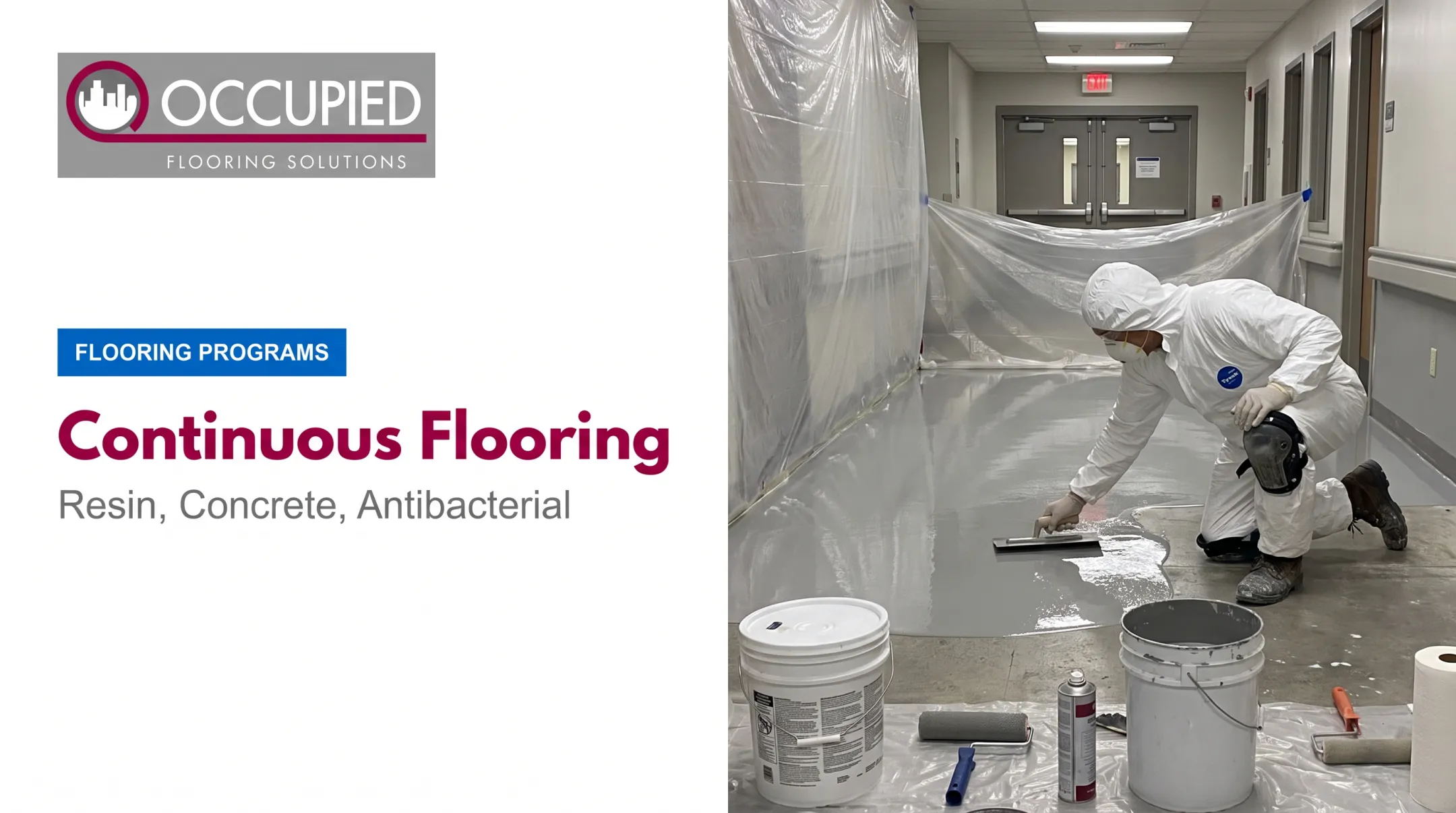
- System Application: The installer applies the body coat, broadcast aggregate (if specified), and topcoat to the correct thickness.
- Detail Work: The installer hand-trowels cove bases and drain interfaces for a precise, seamless finish.
- Inspection and Handover: The installer inspects the finished floor for defects and hands the facility team documentation covering cleaning and maintenance.

Long-Term Care and Repair
Maintaining your resin floor is straightforward but requires using the right methods. The facility should provide its list of cleaning chemicals to the installer before specification to confirm compatibility.
A typical maintenance plan involves:
- Regularly removing dry debris with a broom or dust mop.
- Using approved, pH-neutral cleaners at the correct dilution.
- Promptly cleaning up spills.
- Avoiding overly abrasive pads or brushes that could damage the finish.
- Periodically inspecting high-wear areas, joints, and coves for early signs of damage such as blistering, cracking, or delamination.
Addressing small issues early prevents them from becoming major problems that compromise the substrate.
Planning Hygienic Resin Flooring in an Occupied Commercial Facility
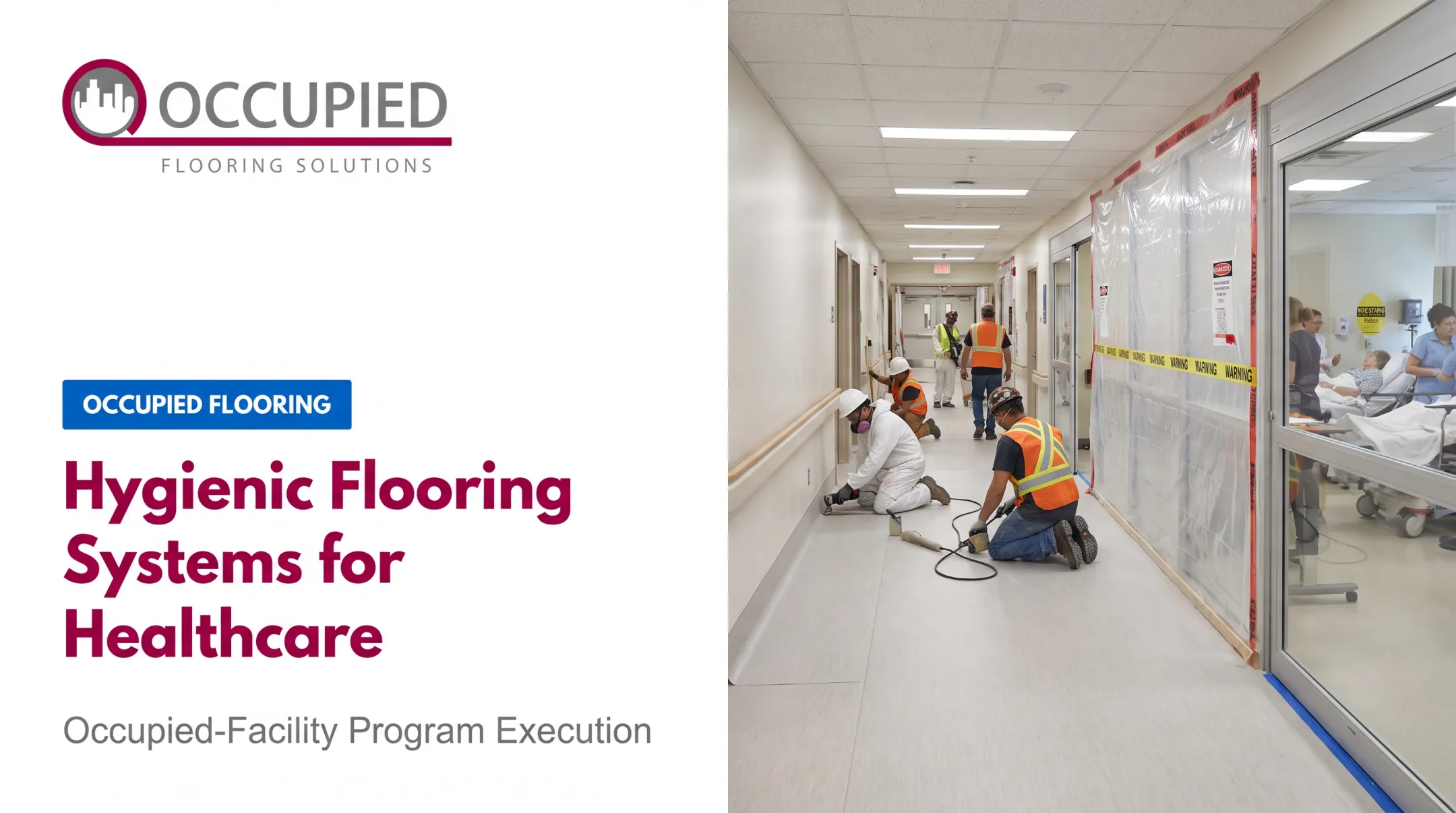
Replacing flooring in an active, occupied facility stacks operational, safety, and logistics demands on top of the install itself. Business continuity has to hold while the work proceeds.
That requires a shift from a traditional contractor mindset to a program management approach. Key planning issues include:
- Isolate work zones physically to control dust, noise, and odors
- Phase work by room, corridor, or department so other areas stay open, often after hours or on weekends
- Coordinate temporary access, deliveries, and escort-required security common in federal and healthcare settings
- Match system cure time to the operating schedule; fast-curing MMA helps, but still needs ventilation and odor control
That coordination is where a program management partner like Occupied Flooring Solutions fits. We run flooring and interior surface programs in active federal, institutional, and commercial portfolios.
Our process is built to protect operational continuity. We manage phased scheduling, security coordination, and stakeholder communication so the project finishes with minimal disruption, as an extension of your facilities leadership team.
Commercial Cost and Lifecycle Value Considerations
What does hygienic resin flooring cost? It depends on system design, site conditions, and how the work is staged. Separate the initial installed price from total cost of ownership over the floor's full service life.
The initial project estimate is driven by several variables:
- Total square footage
- Chosen resin chemistry and system thickness
- Substrate repairs and moisture mitigation required
- Complexity of detailing (coves, drains, and transitions)
- Phasing, access constraints, and after-hours labor
A low-cost bid that skips proper surface preparation or specifies a thinner, less durable system often costs more later through premature failures, repairs, and unplanned downtime.
When comparing bids, require a detailed written scope that locks in system build-up, preparation standard, testing protocols, and warranty terms. That detail keeps proposals comparable and protects lifecycle value.
Frequently Asked Questions
Is hygienic resin flooring cheaper than tile?
A high-performance resin system may cost more upfront than standard tile. Factoring in cleaning, grout repair, and tile’s shorter lifespan in demanding spaces, resin often proves more economical over time.
Is hygienic resin flooring easy to clean?
Yes. Its seamless, non-porous surface is easier to clean than floors with grout lines. Results still depend on compatible cleaners, the right surface texture, and consistent routines.
What is the average lifespan of hygienic resin flooring?
Lifespan depends on the system, traffic, chemical exposure, and maintenance. Standard epoxies often last 7–10 years; heavy-duty cementitious urethane can last decades in tough conditions.
What is hygienic resin flooring used for?
It’s used in commercial and institutional spaces where cleanability, durability, and moisture or chemical resistance matter. Common settings include healthcare facilities, labs, commercial kitchens, schools, and restrooms.
What type of resin flooring is best for commercial buildings?
There is no single best type. Match the system to the room: epoxy for general durability, cementitious urethane for extreme conditions, and MMA when you need a rapid return to service.
Can hygienic resin flooring be installed while a commercial facility remains occupied?
Yes, with specialized planning. Controlled phasing, work-zone isolation, and careful scheduling let teams replace flooring with minimal disruption to daily operations.