
Antimicrobial vinyl flooring has become a popular response to that pressure. But it's a supportive surface choice, not a replacement for hand hygiene, routine cleaning, disinfection protocols, or a broader infection-prevention program.
This article breaks down how antimicrobial protection actually works, which vinyl characteristics matter most for hygiene, where the product category fits, and how to plan an installation in a facility that can't afford downtime.
Key Takeaways
- Antimicrobial vinyl inhibits specified microorganism growth on the surface: it does not sterilize a room.
- Hygienic design (seams, coving, chemical resistance) often matters as much as the antimicrobial claim itself.
- Verify claims against manufacturer testing, US regulatory status, and your cleaning chemicals before specifying or procuring.
- Phased installation plans protect operations, security, and safety in occupied facilities.
What Is Antimicrobial Vinyl Flooring?
Antimicrobial vinyl flooring is standard vinyl (sheet, plank, or tile) manufactured with an added treatment intended to inhibit the growth of specified microorganisms on the product's surface. That's a narrower claim than it sounds. It's different from:
- Standard vinyl with no added treatment
- Post-installation coatings applied after the floor goes down
- Flooring marketed as "easy to clean" without any microbial testing behind it
How Protection Gets Built In
Manufacturers add antimicrobial protection in a few distinct ways, and the method changes what the claim actually means:
- Factory-integrated additives mixed into the wear layer during manufacturing
- Treated wear layers, where the treatment sits in the top protective layer only
- Surface coatings applied at the factory (not the same as a later, site-applied finish)
For example, a 2023 Mannington commercial LVT specification lists a 20-mil wear layer "with Microban Antimicrobial Protection," while a 2024 Gerflor vinyl sheet declaration describes a homogeneous PVC product with a separate surface treatment tested under ISO 22196. These are two different constructions, tested differently, with different claim scope.
Always verify the manufacturer's technical documentation for:
- Which organisms are covered
- What test method was used
- Whether the claim covers growth inhibition, stain control, or something else
Why Vinyl's Physical Construction Matters
The antimicrobial additive is only part of the hygiene picture. Vinyl's construction does real work here:
- Non-porous surfaces resist moisture intrusion and reduce places where soil accumulates
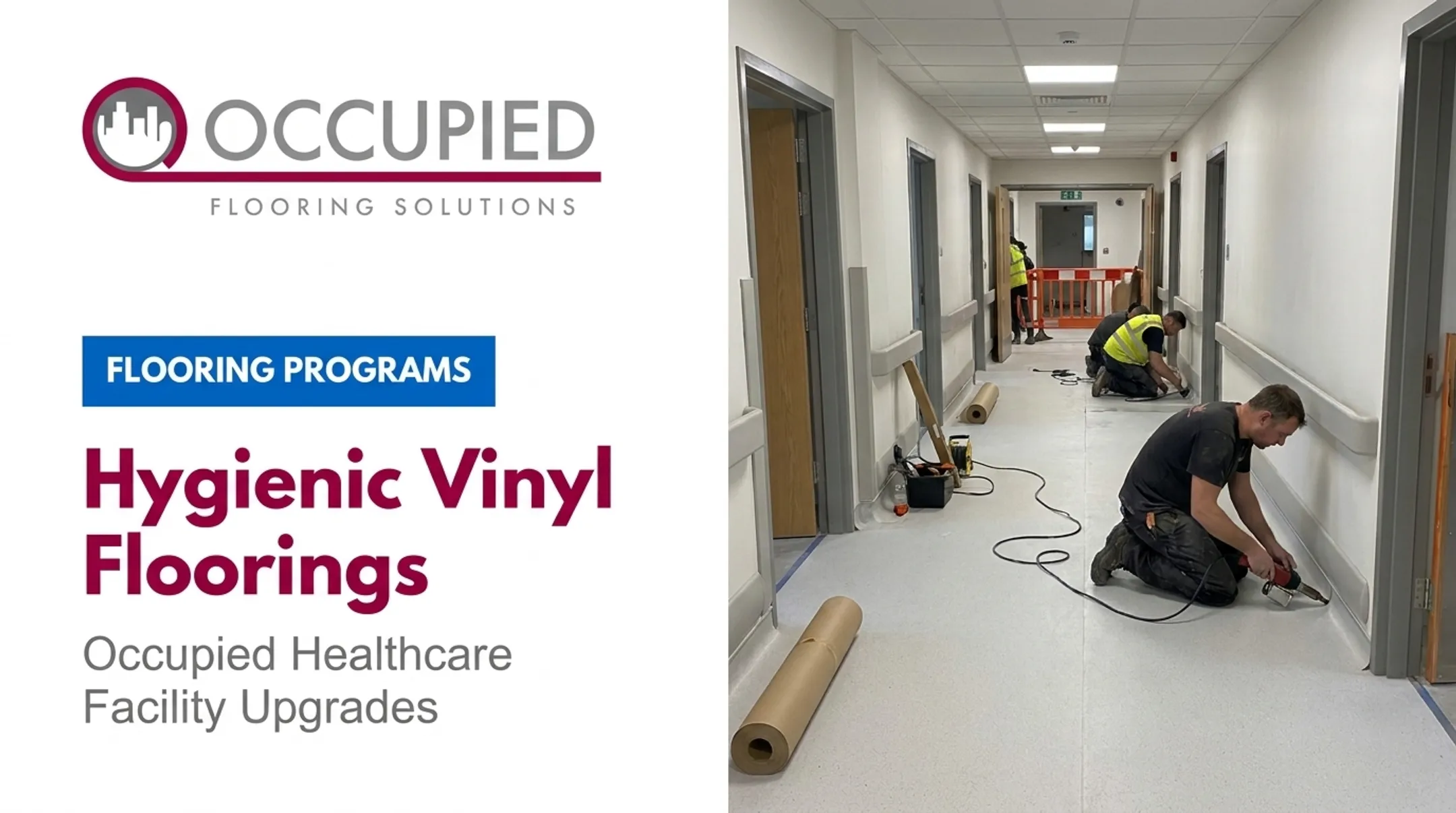
- Heat-welded seams in sheet vinyl close off gaps where liquid and debris can collect
- Integral cove bases eliminate the wall-floor junction as a soil trap
Sheet vinyl's reduced seam count is a genuine hygienic advantage over modular formats like luxury vinyl tile (LVT) or plank. But LVT and plank offer something sheet vinyl can't: easier spot repair and design flexibility, since damaged tiles can be swapped without touching the whole floor.
One distinction matters more than any marketing term. Antimicrobial, antibacterial, antiviral, disinfecting, and sterile are not interchangeable words.
A floor treated to inhibit bacterial growth on its surface has said nothing about viruses, and nothing about eliminating all pathogens in a room. Wording that implies a floor prevents healthcare-associated infections is a claim the product itself likely can't support without specific regulatory backing.
Performance also isn't permanent. Abrasion, refinishing, aggressive chemicals, improper installation, and physical damage can all reduce antimicrobial effectiveness over time. The product's technical data sheet, safety data sheet, and warranty are the only reliable sources for how long protection actually lasts.

Why Consider Antimicrobial Vinyl Flooring?
The strongest practical case for antimicrobial vinyl starts with cleanability, not the antimicrobial claim alone. Smooth, non-porous vinyl doesn't absorb spills the way carpet or porous materials do, which supports faster, more effective routine soil removal.
Practical benefits worth weighing:
- Resistance to recurring foot traffic and moisture when properly installed
- Compatibility with a defined range of cleaning chemicals (verify against product documentation)
- Color, pattern, and modular replacement options that support wayfinding and zone-based repair planning
- A consistent, professional appearance across high-visibility areas
The CDC's environmental infection-control guideline notes that disinfecting floors offers no advantage over routine detergent-and-water cleaning for reducing healthcare-associated infections. That finding does not dismiss antimicrobial vinyl. It reminds facility teams that the surface treatment supports a documented cleaning schedule rather than replacing it.
Where the Limitations Show Up
Antimicrobial vinyl doesn't compensate for poor execution elsewhere. Watch for these failure points:
- Poorly sealed seams that trap moisture and soil despite a treated surface
- Damaged wear layers where the treatment lives, reducing effectiveness immediately
- Standing moisture from inadequate drainage or subfloor issues
- Inadequate subfloor preparation that undermines the whole system regardless of the surface claim
Safety and environmental questions deserve equal attention before purchase. Confirm these items in the technical file, not the marketing brochure:
- Treatment chemistry and regulatory status
- Indoor-air-quality documentation
- Product-specific slip-resistance data (not a borrowed ceramic tile standard)
- Disposal information
Where Is Antimicrobial Vinyl Flooring Used?
Placement depends on the room, not the facility label. Match the floor to that space's traffic, moisture, and cleaning demands.
Higher-scrutiny environments:
- Healthcare, senior living, outpatient, laboratory, and veterinary spaces need cleanability, watertight seams, chemical resistance, and repairability that fit infection-control protocols. NIH's acute-care bulletin focuses on cleanable, joined resilient flooring that handles rolling loads and chemical exposure, not the antimicrobial claim alone.
- Food service areas must meet sanitation, drainage, slip-resistance, and chemical requirements defined by locally adopted food codes. Verify vinyl is actually rated for washdown or production conditions before specifying it.
Moderate priority, appearance and traffic driven:
- Education and childcare: tracked-in soil and durability matter more than microbial claims
- Offices, retail, and hospitality: appearance and operational continuity drive the decision
- Multi-tenant commercial buildings: recurring wear across shared corridors drives specification
Lower priority:
Low-risk administrative offices, storage areas, and spaces with minimal moisture exposure often don't need antimicrobial protection at all. In those rooms, seam design, acoustics, static control, or lifecycle cost usually matter more.
Once you rank the room, confirm the specification against real site conditions:
- Room traffic and rolling-load demand
- Moisture exposure and contamination risk
- Cleaning agents actually used on-site
- Who occupies the space
- How much downtime the facility can tolerate
How to Choose the Right Antimicrobial Vinyl Flooring
Start with performance requirements, not the antimicrobial label. Assess the conditions the floor must handle:
- Traffic intensity and rolling loads
- Furniture weight and impact resistance
- Moisture exposure and staining risk
- Acoustic needs and static control
- Expected cleaning frequency
Match those requirements to wear-layer thickness, gauge, backing, seam method, and available slip-resistance data.
Comparing Vinyl Formats
| Format | Best for | Trade-off |
|---|---|---|
| Sheet vinyl (heat-welded) | Wet, high-risk rooms needing minimal seams and integral coving | Harder to repair a small damaged section |
| Homogeneous/heterogeneous sheet | Demanding commercial or healthcare spaces | Requires professional welding skill |
| LVT or plank | Design flexibility, phased replacement, subfloor access | More total joints than sheet |
Evaluate the Whole Assembly, Not Just the Surface
The floor is only as hygienic as its installation. Review:
- Subfloor moisture testing and levelness
- Crack and joint treatment before adhesive goes down
- Adhesive compatibility with the chosen vinyl format
- Seam welding quality and cove transition details
- Drains, penetrations, and thresholds
Installation details directly affect cleanability, water resistance, and warranty coverage. A poorly executed seam voids the practical value of even the best antimicrobial product.
Verify Claims Before You Buy
Request the following before procurement:
- Technical data sheets and independent test results (organism tested, method, contact time)
- Care instructions and chemical-resistance data matched to your cleaning products
- Warranty exclusions specific to the antimicrobial claim
- Documentation supporting the exact marketing language used
Under 40 CFR 152.25(a), EPA's treated-article exemption covers products protected by a registered pesticide, but it doesn't authorize unregistered public-health claims.
A manufacturer's lab result doesn't automatically mean the product is cleared to promise reduced infection risk—check that the claim language matches what's actually registered.
Finally, compare lifecycle value across:
- Material cost and installation
- Subfloor prep and downtime
- Cleaning labor and repair access
- Expected service life
The cheapest floor to buy isn't always the cheapest to maintain.
Installation, Cleaning, and Occupied-Facility Planning
Getting the product right is only half the job. Installing it in a facility that never fully closes is the other half.
Installation Sequence
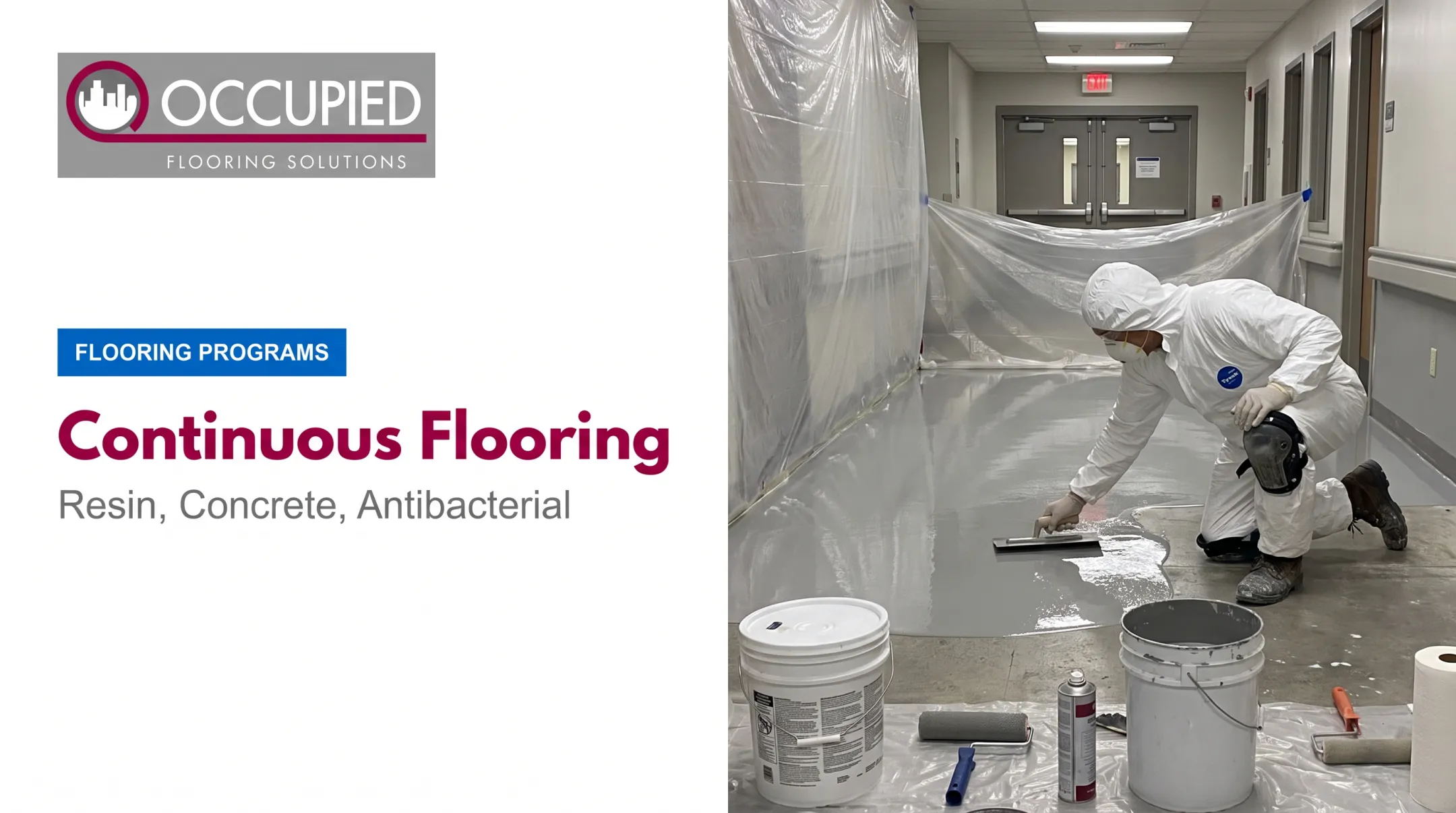
A proper installation follows the manufacturer's specific instructions, not universal assumptions about cure times or subfloor prep:
- Site assessment and moisture/subfloor testing before materials arrive
- Product acclimation on site where the manufacturer requires it
- Controlled surface preparation to meet flatness and cleanliness specs
- Adhesive installation and seam treatment per the approved system
- Cove detailing and full cure before traffic returns
- Final inspection and handover with documentation

Maintenance That Protects the Investment
Routine care keeps the wear layer intact and protects the performance you specified:
- Remove dust and soil routinely
- Respond to spills promptly before they reach seams or the wear layer
- Use only approved cleaners at the correct dilution
- Inspect seams, corners, and transitions periodically for wear
Avoid abrasive methods, unapproved disinfectants, or chemical combinations that can degrade the wear layer and the product's antimicrobial performance.
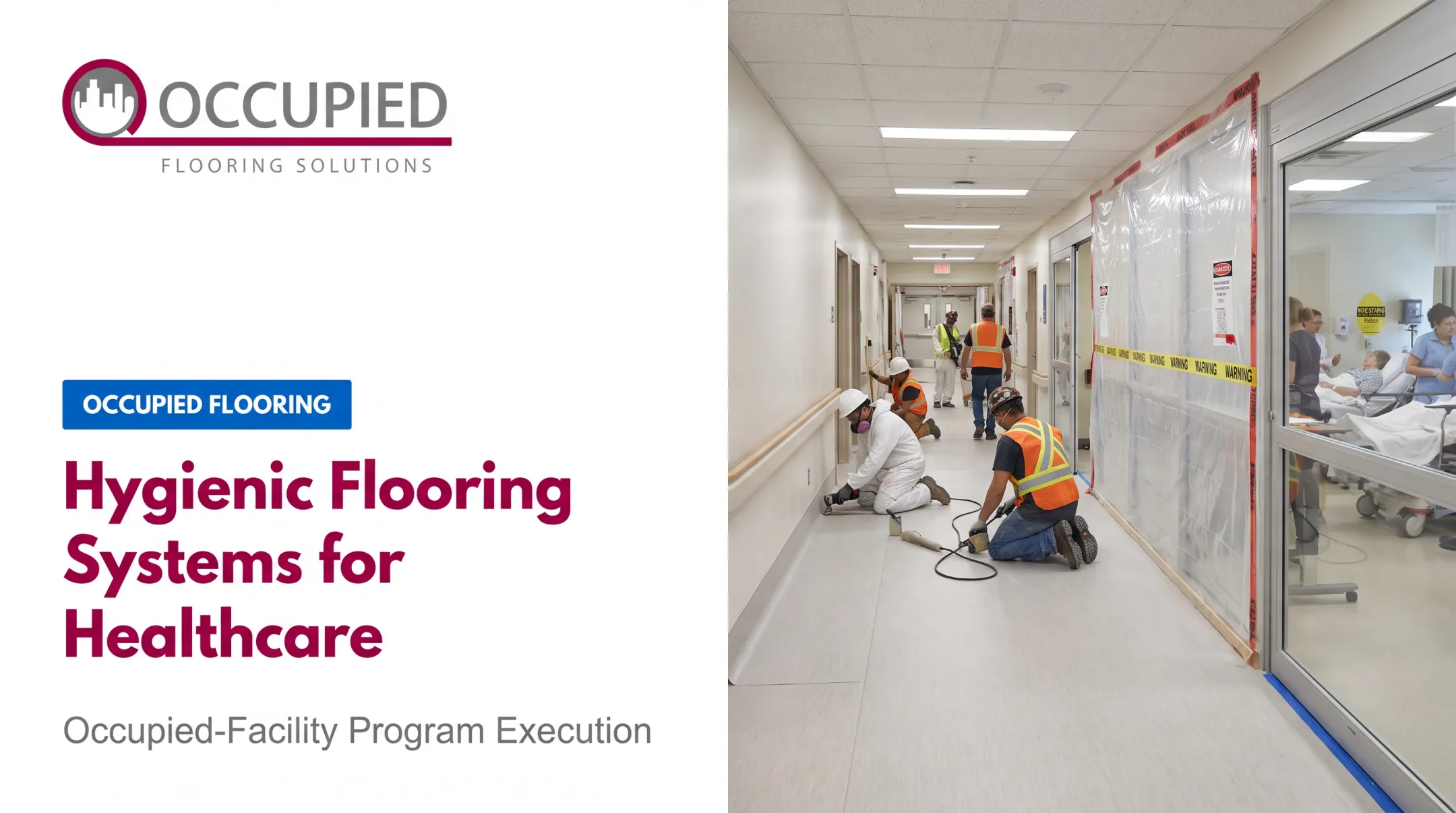
Planning Around an Occupied Facility
This is where most projects run into trouble. Coordinate these items before the first tile goes down:
- Phased work zones and off-hours scheduling
- Temporary routes and furniture moves
- Dust control
- Security and access protocols
Occupied Flooring Solutions works in this space, coordinating phased occupied flooring programs across federal, institutional, and commercial facilities. Typical execution includes:
- Lifting workstations and cubicles instead of dismantling them
- Keeping electrical and IT systems live during the swap
- Returning spaces to service the next business day
It is a program-management and execution partner for controlled occupied renovation, not a manufacturer of antimicrobial vinyl. The product decision still rests on the criteria covered above.
Project handover checklist:
- Cleaning instructions and product data sheets
- Warranty records and exclusions
- Seam and repair location documentation
- As-built drawings and installer details
- Recommended inspection intervals
Frequently Asked Questions
What is antimicrobial flooring?
Antimicrobial flooring incorporates a treatment or additive intended to inhibit the growth of specified microorganisms on its surface. It doesn't sterilize the room or replace routine cleaning.
Which is the healthiest flooring for homes?
There's no universal answer. It depends on moisture, ventilation, indoor-air-quality needs, cleanability, and who uses the space. An antimicrobial treatment alone doesn't determine how healthy a floor is.
Is antimicrobial coating safe?
Safety depends on the specific chemistry, approved use, installation method, ventilation, and ongoing maintenance. Review the manufacturer's technical and safety data sheets before selecting a product.
Does antimicrobial vinyl flooring replace regular cleaning?
No. Routine cleaning removes soil and organic matter that antimicrobial treatments don't address, and disinfection should still follow the facility's risk-based protocol.
Is antimicrobial vinyl flooring suitable for healthcare facilities?
It can be, when the complete system (seams, coving, chemical resistance, slip resistance, and repairability) meets the facility's infection-control requirements, not just the surface claim alone.
What should I check before buying antimicrobial vinyl flooring?
Review product claims and testing documentation, format and seam details, subfloor requirements, cleaning chemical compatibility, warranty terms, and installer qualifications before committing to a purchase.